
🧪 Echoes from the lab
The Light Plants Use Holds Secrets of Ancient Stars
sciencePublished 20 Nov 2025
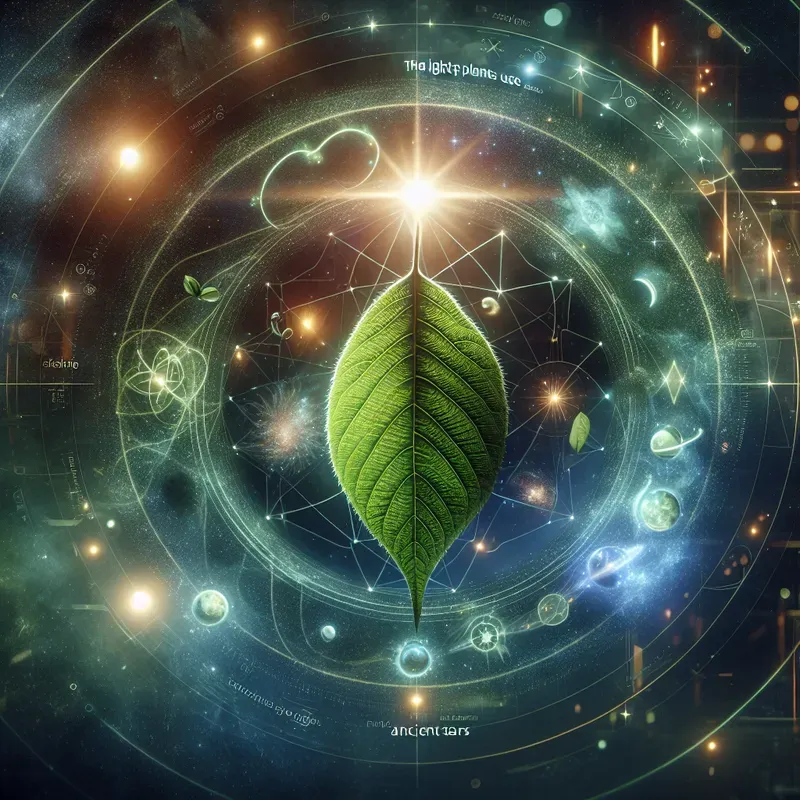
Illustration by DALL·E 3
- What: Plants utilize light that has traveled billions of years from ancient stars, connecting life on Earth to the cosmos.
- Where: Earth
- When: Throughout the history of the universe
- How: Through photosynthesis, plants convert sunlight into energy, using photons that originated from stellar nuclear reactions.
- Why: This connection highlights the intricate relationships between life, history, and the universe, emphasizing our role within it.
Every Leaf Tells the Story of Ancient Light
Imagine a stretch of verdant landscape, each leaf shimmering in the sunlight, whispering secrets from billions of years ago. This light, which nourishes the plants we rely on, has journeyed through the cosmos since the dawn of time. Records suggest that the photons reaching our world today were born from the nuclear reactions of ancient stars, some of which have since exploded into supernovae. This connection illustrates a profound link between life and the universe, raising questions about the ties that bind our present to the distant past.
The Astounding Journey of Photons Through Time
In the process of photosynthesis, plants capture sunlight and convert it into usable energy, a mechanism first fundamentally described by scientists like Jan Ingenhousz in the late 18th century. This seemingly straightforward process is much more than the mere absorption of light; it represents a cosmic symbiosis. The light utilized by plants today can be traced back to the energy emitted by stars that existed millions, even billions, of years ago. When you take a bite of salad, you are not just consuming nutrients but ancient sunlight — atoms that have traversed vast distances across space before contributing to your meal. Estimates indicate that the journey of these photons could span over 13 billion years, effectively making your salad a taste of the universe itself.
This remarkable blend of biology and astrophysics not only intrigues scientists but also challenges our understanding of time. Each leaf serves as a record of ancient events, encapsulating moments where sunlight transformed into energy, reflecting the dynamic history of the universe. The entwining of light, life, and time invites us to ponder how the past continually influences our present and future.
The Continuing Impact of Ancient Light on Modern Life
The significance of this phenomenon today lies in its illustration of the interconnectedness of all things, from the microcosm of a simple leaf to the grandeur of galactic history. Scientists at institutions like NASA and various universities are continuously exploring how this ancient light contributes not only to our ecological systems but also to our understanding of life’s origins on Earth. Present-day research into solar energy draws parallels to photosynthesis, aiming to harness the very essence of the ancient light that fuels plant life. This creates a bridge between historical processes and current technological innovations aimed at conserving energy and mitigating climate change.
The realization that light from ancient stars plays a role in the food we consume enriches our comprehension of both history and science, reminding us that we are deeply woven into the fabric of the universe. It provides a humbling perspective that our existence is part exhibition of cosmic interactions, urging us to reflect on how such ancient processes shape our lives and environment even today.
Did You Know?
The energy from a single photon can take over 170,000 years to reach Earth after being produced in the core of a star. Photosynthesis is responsible for producing about 50% of the oxygen we breathe, showcasing the integral role of plants in the Earth's ecosystem. The oldest known organism capable of photosynthesis was a form of cyanobacteria, which thrived around 2.4 billion years ago, directly influencing Earth's atmospheric conditions.
Keep Exploring
CurioWire continues to uncover the world’s hidden histories — one curiosity at a time.
Sources & References
- NASA — The Role of Stellar Energy in Photosynthesis
- Smithsonian National Museum of Natural History — The Evolution of Photosynthesis
- Journal of Astrophysics and Astronomy — Cosmic Origins of Life on Earth