Kākāpō Recovery Program Tracks Individual Birds to Breed
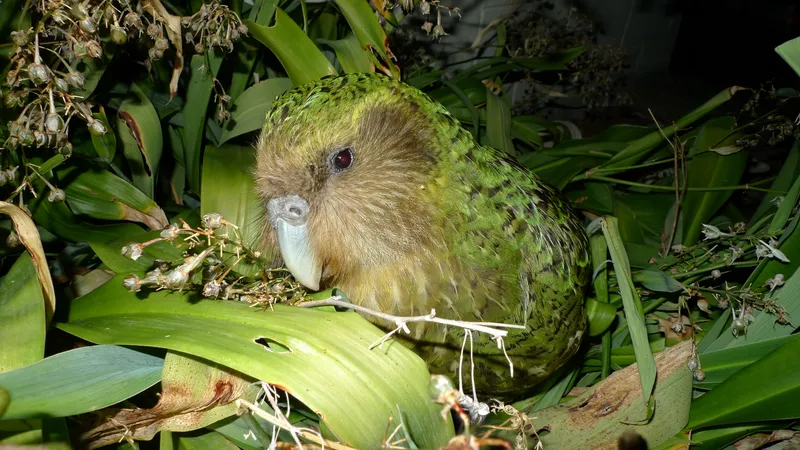
New Zealand’s kākāpō recovery program relies on bird-by-bird monitoring, nest cameras, and direct intervention to improve breeding success for the endangered parrots.
Read more →Read records from the halls of power — global events, political shifts and remarkable stories shaping our world.

New Zealand’s kākāpō recovery program relies on bird-by-bird monitoring, nest cameras, and direct intervention to improve breeding success for the endangered parrots.
Read more →
Hiroshige’s Tōkaidō woodblock prints helped turn specific stations, teahouses, and views into memorable travel destinations for Edo-period travelers.
Read more →It marked Caesar’s decision to defy the Senate, turning a political standoff into civil war and becoming a lasting symbol of an irreversible choice.
Read more →
This list highlights unusual border arrangements where political boundaries shape everyday life by cutting through towns, access routes, or shared spaces.
Read more →
NOAA recorded the Bloop in 1997, and researchers later concluded it was most likely a large icequake rather than a biological sound.
Read more →
London’s Millennium Bridge opened in 2000, developed a noticeable sideways wobble when crowded, and was later retrofitted with dampers before reopening in 2002.
Read more →
The Moscow Metro was designed not only as a transit system but also as part of Soviet civil defense, with deep stations serving as air-raid shelters during wartime.
Read more →
The article explains how some homes in Belén are built to float with seasonal Amazon floods, allowing residents to keep living there as water levels rise.
Read more →
Iran’s crown jewels survived the 1979 revolution because they had already been transferred into state custody and tied to the country’s financial system, not kept as private royal property.
Read more →
Archaeologists at Liang Bua cave found tiny hominin fossils later classified as Homo floresiensis, a discovery that challenged simple views of human evolution and raised questions about island-driven change.
Read more →It mattered because it became a lasting expression of Marx’s idea of a higher communist society, where people would contribute according to ability and receive according to need.
Read more →
The Falkirk Wheel is a rotating boat lift in Scotland that reopened a broken canal connection between the Union Canal and the Forth & Clyde Canal.
Read more →
Measurements showed that water flowing into Minnesota’s Devil’s Kettle does not disappear; it reenters the Brule River downstream.
Read more →
Serra da Capivara National Park is a major Brazilian rock-art site whose many prehistoric paintings and excavations are central to debates about the early peopling of the Americas.
Read more →
Centralia, Pennsylvania, was gradually emptied after an underground coal seam fire started in 1962 and continues to smolder beneath parts of the town.
Read more →
Robert P. McCulloch bought London Bridge in 1968, dismantled it, and rebuilt it as a landmark in Lake Havasu City to help promote his Arizona development.
Read more →
Qanats are ancient underground channels that move groundwater by gravity and still supply water in some dry communities.
Read more →
John Snow’s investigation of the 1854 Soho cholera outbreak helped support the idea that cholera spread through contaminated water, not bad air.
Read more →
The Codex Gigas, known as the Devil’s Bible, is a famous medieval manuscript notable for its huge size, striking Devil portrait, and surrounding legend.
Read more →
Icelandic rye bread is baked by burying dough in geothermal ground, where natural heat slowly cooks it over about a day.
Read more →
Giethoorn’s historic center is known for a canal-based layout with footpaths and footbridges instead of a conventional street grid, shaping how people move through the village.
Read more →
The Basilica Cistern in Istanbul contains two reused Medusa heads that have become among its most debated and recognizable features.
Read more →
Longyearbyen does not allow standard coffin burials in the ground because permafrost prevents bodies from decomposing normally, so deaths are often handled by cremation on mainland Norway.
Read more →
Grosse Île was a quarantine station where immigrants arriving in Canada through Quebec were inspected for disease before continuing inland.
Read more →
The New Safe Confinement is a steel arch built to isolate Chernobyl’s damaged Reactor 4 and support long-term cleanup and decommissioning work.
Read more →
A melted pocket watch at the Nagasaki Atomic Bomb Museum, stopped at 11:02 a.m., serves as a stark material record of the atomic bombing.
Read more →Tap a topic to search across all CurioWire stories.

Project Habbakuk was a World War II Allied proposal to build a massive aircraft carrier from pykrete, but it was never completed.
Read more →
Nauru has no military and relies on Australia for defense, a relationship formalized by a security treaty in 2024.
Read more →
Bhutan banned nationwide tobacco sales in 2004, then lifted the ban in 2021 amid illegal trade and enforcement problems that made the policy difficult to sustain.
Read more →
Project MK-Ultra was a real CIA mind-control research program that used LSD and other methods in covert experiments on human subjects, often without proper consent.
Read more →