
🧪 Echoes from the lab
Hidden Life Thriving in Earth's Darkness for Millions of Years
sciencePublished 27 Nov 2025
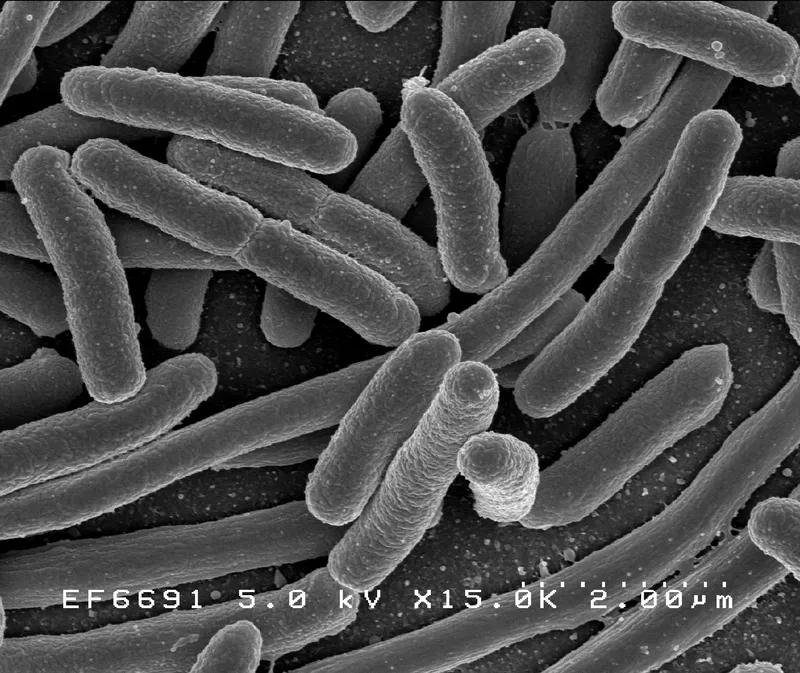
Image via Wikimedia Commons
- What: Deep beneath the Earth's surface, extremophiles, particularly bacteria, thrive in extreme conditions, challenging our understanding of life's limits.
- Where: Earth's crust, including deep-sea environments.
- When: Ongoing research, with significant findings from 2015.
- How: These microorganisms utilize chemosynthesis, converting minerals into energy without sunlight.
- Why: Their existence expands our definition of life and informs astrobiological studies in the search for extraterrestrial organisms.
Astonishing Life Forms Beneath the Earth's Surface
Deep beneath the Earth’s surface, life persists in conditions that defy our understanding of survival. In the dark, where sunlight never penetrates, bacteria thrive at temperatures reaching up to 121 degrees Celsius (250 degrees Fahrenheit). These tiny organisms convert minerals within the Earth's crust into energy, unveiling a remarkable chapter in the story of life that raises profound questions about life's boundaries. What secrets lie within these ancient bacteria, and how do they redefine what we consider possible for life?
Revealing the Extremophiles of the Deep Crust
In an extraordinary exploration, scientists have identified extremophiles—specifically, a class of bacteria that dwell in the Earth's crust, isolated from sunlight and air for millions of years. Research conducted by the Deep Carbon Observatory in 2015 reveals that these microorganisms have been thriving in absurdly high temperatures and pressure conditions, forming a hidden ecosystem. One study from the subseafloor of the Pacific Ocean uncovered microbes living around 5,000 meters deep, where no sunlight penetrates and the environment is hostile by human standards. These bacteria rely on chemosynthesis, using chemicals from minerals instead of sunlight, demonstrating an adaptation that evolutionary biologists had barely imagined. This discovery not only alters our understanding of life on Earth but also ignites speculation about extraterrestrial life. If organisms can exist in such extreme conditions on our planet, could similar life forms thrive on other celestial bodies, like the subsurface oceans of Europa or the acidic clouds of Venus? The implications are profound: life could be flourishing beyond Earth, in dimensions we have yet to explore.
The Relevance of Extremophiles to Modern Science
The reason this matters today is that these extremophiles challenge our very definition of life. They suggest that life can exist in forms we have not yet discovered, expanding the parameters of where we might find life beyond Earth. Current astrobiological studies, like those led by NASA's Astrobiology Institute, are actively searching for similar extremophiles on Mars and beyond, using lessons learned from Earth's deep biosphere. In parallel, the practical applications of these discoveries impact biotechnology. Scientists are studying extremophiles to develop new bioprocesses and materials that could help withstand extreme conditions, such as high temperatures and acidity. As our technological landscape grows, harnessing these microorganisms can lead to innovations in energy production and waste management—fields where extreme conditions often present significant challenges. This reveals that our quest to understand life in the deepest parts of our planet also sheds light on our future on Earth and beyond, inviting us to ponder the vast possibilities of existence itself.
Did You Know?
- Some bacteria in Earth's crust can withstand conditions equivalent to those found in outer space. - The bacteria discovered in deep-sea vents use hydrogen sulfide from the Earth instead of sunlight for energy. - It is estimated that more than 90% of the microbial life on Earth exists deep beneath the surface, remaining largely unexplored.
Keep Exploring
CurioWire continues to uncover the world’s hidden histories — one curiosity at a time.
Sources & References
- Deep Carbon Observatory — Research on deep biosphere microorganisms
- NASA's Astrobiology Institute — Studies on extremophiles and life beyond Earth
- Journal of Microbiology — Articles on extremophiles and their adaptations