
🏺 Recovered from the dusty archives
How the Treaty of Tordesillas Shaped South America's Modern Identity
historyPublished 08 Dec 2025
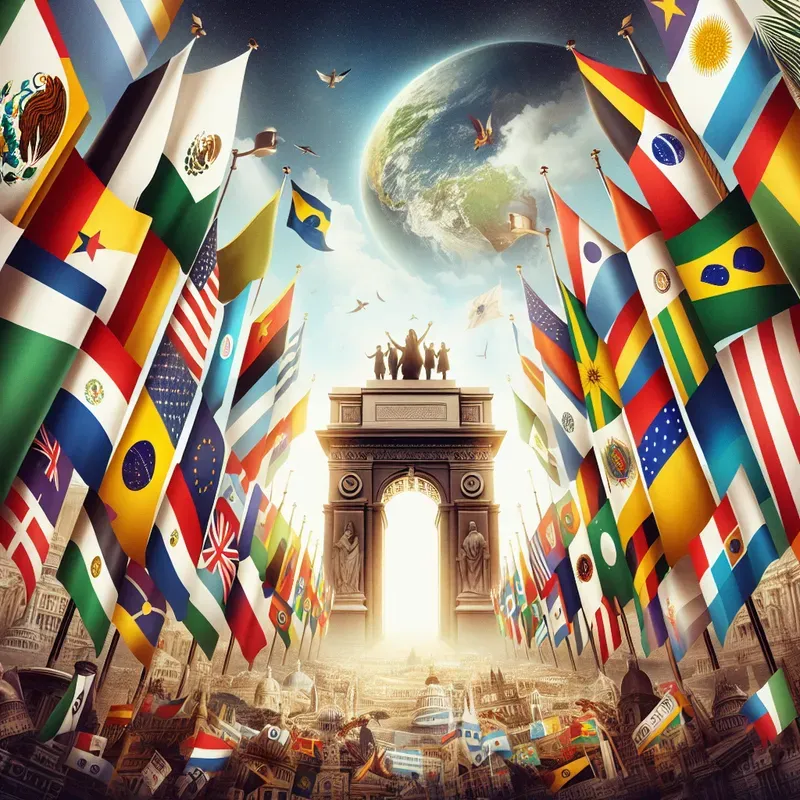
Illustration by DALL·E 3
- What: The Treaty of Tordesillas, signed in 1494, divided the New World between Spain and Portugal, shaping the cultural and linguistic landscape of South America.
- Where: South America
- When: 1494
- How: The treaty established an imaginary line in the Atlantic Ocean, allocating lands to Spain and Portugal.
- Why: It matters today as South America continues to navigate the cultural distinctions resulting from this historical division.
Transatlantic Shadows of the Treaty of Tordesillas
At dusk, even centuries later, the palpable tension of the past lingers in the air, reminding us how a mere agreement in 1494 cast long shadows over South America. The Treaty of Tordesillas, signed between Spain and Portugal, divided the New World into areas of control. This seemingly minor diplomatic maneuver not only influenced the geopolitics of its time but also shaped the future borders of nations and their distinct cultures, languages, and identities.
The Historic Agreement That Redefined Empires
The Treaty of Tordesillas emerged from the Age of Exploration, a time when kingdoms raced to expand their empires beyond the horizons of Europe. On June 7, 1494, representatives from Spain and Portugal signed this pivotal agreement under the auspices of Pope Alexander VI, who sought to prevent conflict over newly discovered lands. The treaty delineated an imaginary line in the Atlantic Ocean — lands to the west would belong to Spain, while those to the east would be controlled by Portugal. Specifically, this boundary placed most of Brazil within Portuguese hands, while a significant portion of South America fell under Spanish rule, influencing the cultural and linguistic landscape of the continent. The implications were staggering. As Portugal established its empire in Brazil, the Spanish used their territories to spread Catholicism and their language, leading to the rich tapestry of cultures within South America. This treaty, crafted in a time of explorers, carved out modern national borders. Countries such as Brazil, Argentina, and Peru emerged from this colonial division, marking a profound shift in human history. Moreover, this division contributed to a complex history of conflict and cooperation, where cultural exchanges flourished and indigenous populations faced dispossession and cultural metamorphosis. Viewing it through this lens invites us to question the lingering implications — how much of today’s cultural identities can be traced back to a singular agreement made over five centuries ago?
The Enduring Legacy of a Simple Treaty
The reason this matters today is that this treaty serves as a poignant reminder of how seemingly insignificant events can define the trajectories of nations. In modern times, South America still grapples with the linguistic and cultural distinctions that result from this historical division. For instance, Portuguese is the primary language in Brazil, while Spanish thrives in Argentina, Chile, and Colombia. This sprawl of cultural identities — from food to music and religion — reflects the roots laid by colonial powers and treaties like Tordesillas. This resonates in contemporary discussions on nationalism and identity, where colonized peoples grapple with their past to forge a unified sense of self. Recent studies suggest that the narratives formed during this colonial period continue to influence societal values and push towards either divisiveness or unity in these diverse communities. The Treaty of Tordesillas reveals how cultural exchange, conflict, and cooperation continue to echo through time, forging connections among nations that might otherwise seem disparate.
Did You Know?
In a unique twist, the Treaty of Tordesillas led to Brazil being the only Portuguese-speaking nation in South America, creating a linguistic island surrounded by Spanish-speaking countries.
The Pope who sanctioned the treaty, Alexander VI, was born Rodrigo Borgia, and his controversial papacy was marked by nepotism and corruption, underscoring the intertwining of religious authority and political ambition.
Modern Brazil’s cultural influences, from martial arts like capoeira to eclectic music genres such as samba and bossa nova, can be traced back to the diverse amalgamation of indigenous, African, and European heritage shaped by colonial history.
Keep Exploring
CurioWire continues to uncover the world’s hidden histories — one curiosity at a time.
Sources & References
- [The British Museum]
- [Journal of Latin American Studies]
- [National Geographic]