
🧪 Echoes from the lab
Ancient Roman Concrete's Surprising Self-Healing Secrets Unveiled
sciencePublished 10 Dec 2025
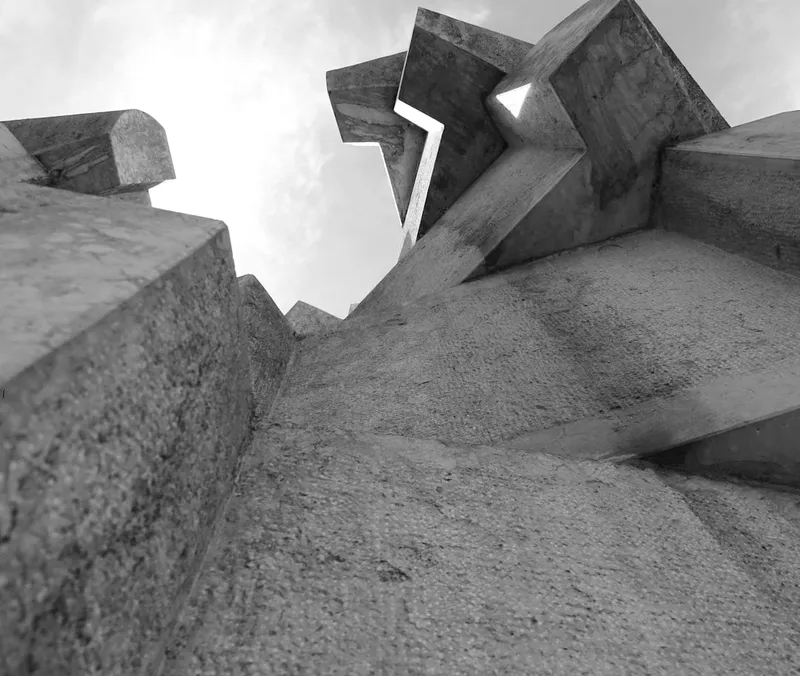
Image courtesy of Unsplash
- What: Ancient Roman concrete's unique composition allows it to self-repair over time, showcasing a remarkable durability.
- Where: Ancient Rome
- When: Over 2,000 years ago
- How: The combination of volcanic ash and lime reacts with seawater to form new minerals that reinforce the concrete.
- Why: Understanding these ancient techniques can inspire more sustainable construction methods today.
What if structures could heal themselves with time?
In a world where modern materials often crumble within decades, ancient Roman concrete stands as a stunning enigma. This remarkable substance, which has endured for over two millennia, possesses a unique property derived from its mix of volcanic ash and lime. It reacts with seawater, forming new minerals that enhance its strength, a phenomenon that has intrigued researchers and engineers alike.
Reevaluating Ancient Materials Through Modern Science
Recent studies, including impressive research conducted by scientists from the Massachusetts Institute of Technology (MIT) in 2017, unveiled the secrets behind Roman concrete's durability. The material contains volcanic ash sourced from Pozzuoli Bay, which, when mixed with lime and seawater, triggers a chemical reaction. The result? Over time, new minerals such as aluminum tobermorite are produced, effectively reinforcing the concrete and allowing it to adapt in the face of decay. This process showcases a profound understanding of materials science that modern engineers are only beginning to appreciate. Imagine a structure that, instead of deteriorating, adapts and strengthens—a reality once unrecognized, now illuminating a course for the future of construction.
Why Ancient Engineering Holds Modern Significance
The revelations about Roman concrete challenge our perceptions of what ancient civilizations understood about materials and engineering. This ancient wisdom may hold the key to developing more sustainable construction methods today. As environmental concerns rise, the deeper truth is that these 2,000-year-old techniques inspire new approaches to longevity and resilience in engineering. The implications stretch beyond architecture, suggesting we must rethink our reliance on modern synthetic materials. In a world increasingly prone to climate change, reflecting on such ancient innovations can guide us toward a future that honors the past while enhancing our present. What other hidden insights from history might reveal the secrets to enduring resilience?
Did You Know?
Ancient Roman concrete structures have stood against the test of time, with some surviving for over 2,000 years, reflecting sophisticated engineering knowledge.
The volcanic ash used in Roman concrete interacts with seawater, resulting in a self-healing mechanism that repairs damage over time.
Studies show that modern concrete lacks the same durability, deteriorating significantly faster than the ancient Roman counterparts that still grace our world.
Keep Exploring
CurioWire continues to uncover the world’s hidden histories — one curiosity at a time.
Sources & References
- Historical archives on Roman engineering
- Materials science journals discussing ancient concrete
- Research publications on sustainable construction methods