
🚀 Whispers from the silent cosmos
The Cosmic Voids That Redefine Our Universe's Fabric
spacePublished 28 Dec 2025
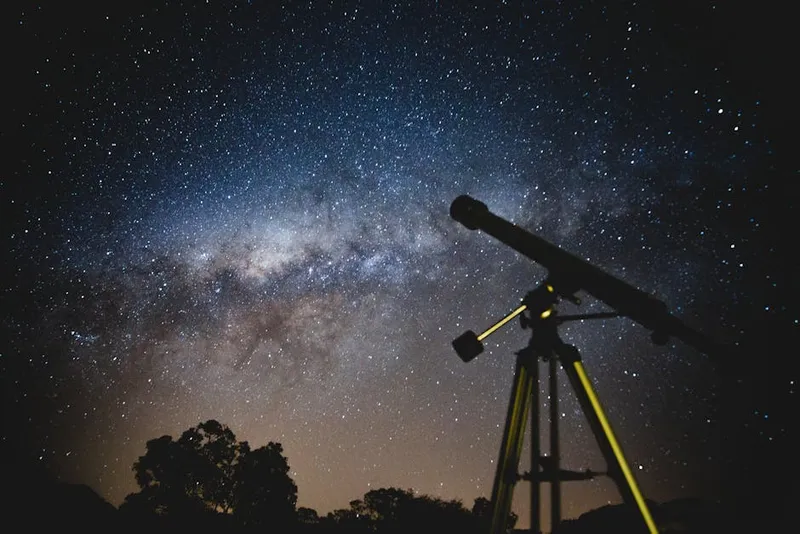
Image courtesy of Pexels
- What: Cosmic voids are vast, empty regions in the universe that significantly influence galaxy formation.
- Where: Throughout the universe
- When: Contemporary astrophysics research
- How: Observational data from galaxy redshift surveys, particularly the Sloan Digital Sky Survey, reveal their intricate role.
- Why: Understanding cosmic voids challenges our perception of the universe's structure and the forces shaping it.
Giant Gaps in the Cosmos Challenge Our Understanding
Imagine looking up at the night sky and realizing that much of it is empty—truly empty. In the fabric of our universe, vast cosmic voids exist, seemingly vacant spaces that stretch across millions of light-years. Observational data from galaxy redshift surveys, notably the Sloan Digital Sky Survey (SDSS), have revealed an extraordinary connection: these enormous gaps are not random but are intricately woven into the growth of cosmic structures. As researchers delve into the mysteries of cosmic voids, they expose a universe far more complex than previously imagined. What does it mean for our understanding of space when we confront such expansive emptiness?
Unveiling the Hidden Patterns of Cosmic Voids
The discovery of cosmic voids is as significant as it is unsettling. These gigantic bubbles, often measuring up to 60 million light-years in diameter, present a strikingly patterned distribution across the universe. The SDSS findings suggest that the presence and evolution of galaxies are not solely about clusters and dense regions but are fundamentally influenced by the voids that surround them. Researchers continue to explore how these empty regions may actually serve as scaffolding, guiding the process by which galaxies and massive structures form over the cosmic timeline. The correlation between these voids and the growth of cosmic structures remains complex, shrouded in scientific debate. Could their existence indicate unseen forces at play, or even a greater cosmic design?
Why Cosmic Voids Matter in Today's Research
The significance of cosmic voids extends beyond mere astronomical curiosity; they challenge our understanding of the universe's overall structure. As modern astrophysics continues to grapple with dark energy and dark matter, the patterns of voids documented through observational studies offer potential insights into the fundamental mechanisms shaping our cosmos. By contemplating the role of these vast empty spaces, scientists embark on a quest that redefines our cosmic narrative. What other mysteries lie hidden in the vastness of space, waiting for us to uncover?
Did You Know?
Cosmic voids can take up to 80% of the universe's volume, leaving only the remaining 20% for the galaxy clusters and stars we typically observe.
Recent studies show that the structure of cosmic voids may influence galaxy formation, fundamentally altering our understanding of how matter aggregates in space.
The Sloan Digital Sky Survey, which began mapping the universe in 2000, has provided crucial data on over 500,000 galaxies and revealed patterns that hint at the complex interplay of void dynamics in cosmic evolution.
Keep Exploring
CurioWire continues to uncover the world’s hidden histories — one curiosity at a time.
Sources & References
- NASA Astrophysics Data System
- Astrophysical Journal
- Royal Astronomical Society