
🫀 Secrets of the human vessel
The Hidden Cognitive Decline Behind a Youthful Façade
healthPublished 28 Dec 2025
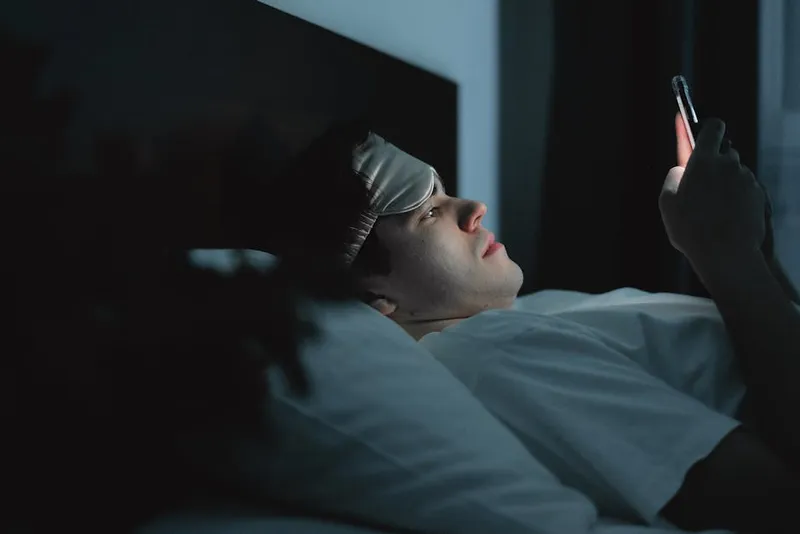
Image courtesy of Pexels
- What: Narcolepsy causes cognitive decline in seemingly youthful individuals, revealing a stark contrast between appearance and mental clarity.
- Where: United States
- When: Contemporary studies
- How: Cognitive impairment manifests through disrupted sleep patterns in narcoleptic patients.
- Why: Understanding this phenomenon is crucial for recognizing the hidden struggles and complexities of identity in those affected.
Struggling with Mental Clarity Despite Youthful Energy
Imagine a vibrant young adult suddenly grappling with the simplest of tasks, their once sharp mind now clouded by an invisible veil. In recent studies, researchers have documented alarming cases of cognitive decline in individuals with narcolepsy, a sleep disorder often characterized by sudden sleep attacks. The paradox of these findings is striking: the patients appear youthful and full of life while their mental faculties battle unseen challenges. What causes this dissonance between appearance and cognition, and what does it reveal about the complexities of the human brain?
Unraveling the Enigma of Narcolepsy and Cognition
The neuropsychology of sleep disorders has long fascinated scientists and medical professionals alike. In individuals suffering from narcolepsy, cognitive impairment can manifest in various ways, from difficulties with memory recall to issues with attention and problem-solving. Research led by Dr. Thomas Scammell and his team at Harvard Medical School has shown that narcoleptic individuals—some appearing as young and active as anyone else—often experience significant disruptions in cognitive functions that challenge established understanding of cognitive function in sleep disorders. Despite engaging in everyday activities, the cognitive toll can be substantial, leading to an unsettling realization: the mind can betray even the most vigorous body. What makes this phenomenon especially perplexing is the lack of clear causative mechanisms. While researchers recognize that the interplay between disrupted sleep patterns and cognitive decline remains poorly understood, the emotional and psychological ramifications are undeniable. These patients may encounter an overwhelming frustration; how can someone so seemingly vibrant feel so hindered by the confines of their own mind? The struggle between outward vitality and internal decline compels one to explore deeper questions about identity, resilience, and what it means to be young in a world where the mind cannot keep pace.
The Lasting Impact on Lives and Futures
Today, the implications of narcolepsy’s cognitive effects ripple through healthcare professions and social services. Raising awareness about the hidden struggles individuals with narcolepsy face is essential not just for effective diagnosis and management, but also for fostering understanding in a society often preoccupied with physical appearance. The dissonance between a youthful façade and fading clarity holds a mirror to personal and collective dignity, challenging us to regard each person as an intricate tapestry of experiences, capabilities, and vulnerabilities. What if the energy we perceive could conceal a silent battle yearning for empathy? As society advances, will we heed this call, or will we continue to overlook those caught in the shadows of unspeakable challenges?
Did You Know?
Narcolepsy affects approximately 1 in 2,000 people in the United States, yet many remain undiagnosed due to the complex symptoms that often mimic other conditions.
Studies suggest that individuals with narcolepsy can experience cognitive impairments similar to those seen in Alzheimer's disease, despite their youth and outward health.
Current research continues to explore the brain chemicals involved in narcolepsy, yet the exact relationship between sleep disruption and cognitive impairment remains a mystery.
Keep Exploring
CurioWire continues to uncover the world’s hidden histories — one curiosity at a time.
Sources & References
- Harvard Medical School
- National Institutes of Health
- American Academy of Sleep Medicine