
🫀 Secrets of the human vessel
A Rare Condition Pushed Her Bones to Old Age Early
healthPublished 07 Jan 2026
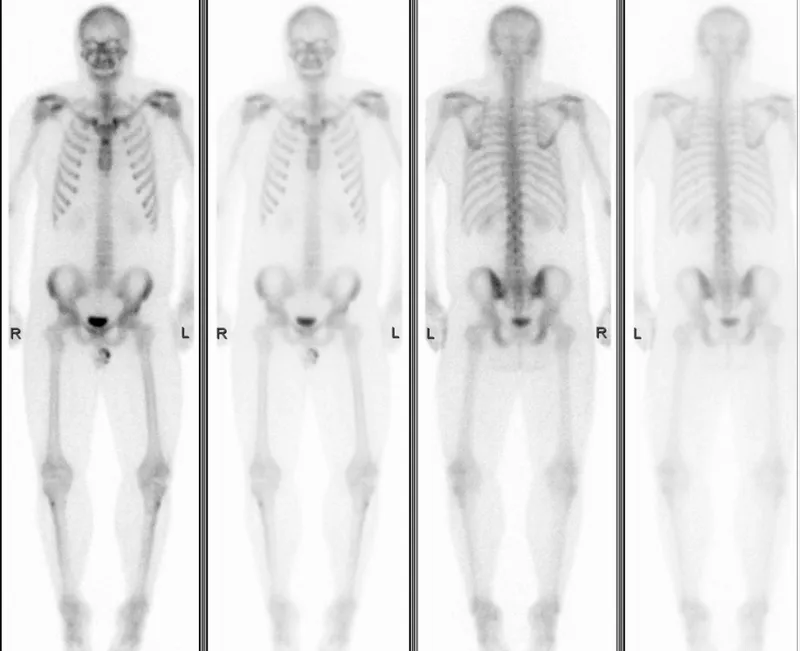
Image by James Heilman, MD — CC BY-SA 4.0
- What: A young woman with ankylosing spondylitis experiences accelerated skeletal aging, resembling an older individual.
- Where: [Not specified]
- When: [Not specified]
- How: Through the long-term effects of inflammation that distort the timeline of disease progression.
- Why: This case highlights the critical relationship between chronic inflammation and aging, prompting a reevaluation of how diseases affect skeletal health.
The Unbelievable Case of Sudden Aging
Imagine being in your twenties, yet your body resembles that of someone much older, struggling with the fragility of brittle bones and the weight of unexplained pain. This was the reality for a young woman diagnosed with ankylosing spondylitis, a form of arthritis that primarily affects the spine. With a swift decline into frailty, researchers turned to bone density scans and intricate imaging studies to unravel how her condition fundamentally challenged the traditional understanding of disease progression. Could inflammation truly cast such a long shadow on youthful bones?
The Hidden Mechanism Behind Accelerated Aging
This young woman’s case is both astonishing and troubling. As she grappled with the debilitating effects of ankylosing spondylitis, her medical records revealed a startling picture: an accelerated aging process likened to that of a much older patient. The investigation hinged on bone density scans that illuminated what remains a debated mystery in gerontology and osteoporosis research. The long-term effects of inflammation, once considered a mere symptom of her condition, appeared to be a catalyst for premature skeletal aging, distorting the timeline of the disease.
Research underlines a complex interplay between inflammatory responses and skeletal health. Inflammation, while a natural immune response, can have drastic repercussions on the skeletal system, prompting bone loss and altering bone density far beyond what age alone would dictate. This anomaly reveals a puzzling narrative where the very mechanisms of the body, in their attempt to fight inflammation, inadvertently lead to the deterioration typically associated with old age, calling into question our fundamental understanding of how diseases impact the body over time.
The Broader Implications of This Discovery
The implications of such findings resonate deeply within the realm of modern medicine. As this young woman's case underscores, it brings to light a crucial dialogue about the intersection of chronic inflammation and aging, especially relevant to populations at risk for inflammatory disorders. Current research continues to explore how inflammation interacts with skeletal health, aiming to shed light on new treatment pathways that might mitigate these unwanted effects. This dialogue opens the door to a greater understanding of human vulnerability, urging us to reconsider how inflammation can redefine what we know about the aging process and diseases related to it. Where will this exploration lead, and how many lives could it change?
Did You Know?
Bone density scans utilize X-ray technology to create a detailed picture of bone health, crucial for diagnosing osteoporosis early.
Ankylosing spondylitis commonly affects young adults, particularly men, and its symptoms can include severe back pain and stiffness, often leading to long-term spinal deformities.
Research into inflammation’s effects on bone density suggests that managing chronic inflammation could significantly enhance quality of life for individuals with disease-related skeletal aging.
Keep Exploring
CurioWire continues to uncover the world’s hidden histories — one curiosity at a time.
Sources & References
- National Institute of Arthritis and Musculoskeletal and Skin Diseases
- Journal of Bone and Mineral Research
- American College of Rheumatology