
🚀 Whispers from the silent cosmos
Scientists Reveal How Stars Shape Worlds in Unseen Ways
spacePublished 12 Jan 2026
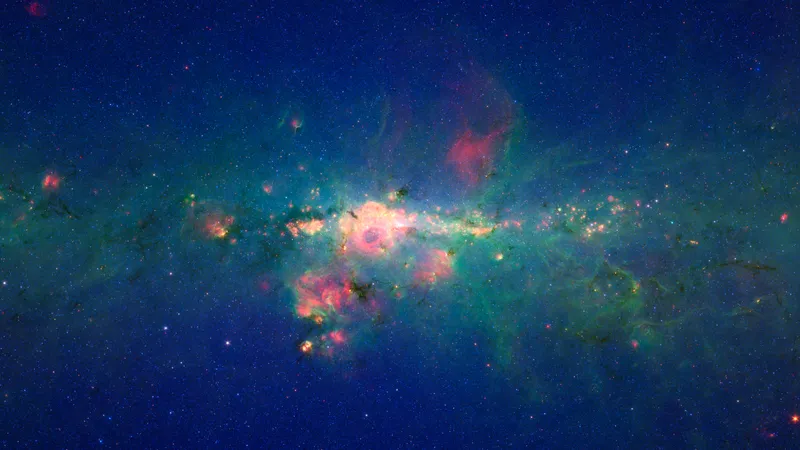
Image by NASA/JPL-Caltech — Public domain
- What: Stars influence the habitability of surrounding planets through powerful flares and complex interactions.
- Where: Throughout the universe
- When: Contemporary research era
- How: Stellar flares alter planetary atmospheres, affecting potential for life.
- Why: This understanding reshapes the search for life beyond Earth.
Unraveling the Cosmic Connection Between Stars and Planets
The universe plays a game of celestial chess, where the moves of quirky stars shape the potential habitability of surrounding planets in ways we are just beginning to comprehend. The Kepler Space Telescope has provided burgeoning data that reveals astounding variabilities in stellar flares—eruptions so powerful they can influence the atmospheres of orbiting worlds. As researchers peel back these layers, their findings spark a profound mystery: How much do our star systems dictate the existence of life?
Unseen Forces: Stellar Behavior and Planetary Potential
Delving into the complexities of astrobiology, scientists analyze the Kepler Space Telescope data, uncovering an intricate web of interactions between stars and their planets. These stellar flares, which manifest as sudden bursts of energy, are not merely dazzling displays but pivotal catalysts affecting the atmospheres of nearby planets. This variability in stellar behavior leads to feedback loops that can significantly alter the potential for life to thrive in these distant worlds. While the mechanics of such phenomena remain hotly debated, the revelation that stars can influence habitability compels us to reconsider our understanding of life’s possibilities in the universe. What once seemed a linear relationship in our solar system transforms into a dynamic interplay that could dictate whether a planet thrives or merely survives under the glaring gaze of its sun.
Why This Discovery Reshapes Our Search for Habitable Worlds
This revelation has shifted the focus of exoplanet exploration toward understanding these complex dynamics, marking a turning point in how scientists approach the search for life beyond Earth. By recognizing the myriad ways in which stars shape their surrounding environments, researchers pave the way for future missions aimed at uncovering the true potential of planets residing in the habitable zone. As we traverse the cosmos in search of kin, we do so with a deeper awareness of our own stellar origins and the remarkable forces at play. Could the perfect conditions for life be a matter of cosmic luck and stellar dynamics? The depths of this mystery echo through our explorations, evoking wonder about the extreme scales of time and the vast isolation of space.
Did You Know?
The Kepler Space Telescope, operational from 2009 to 2018, identified over 2,600 confirmed exoplanets, greatly expanding our understanding of planetary systems.
Stellar flares can release energy equivalent to millions of atomic bombs, potentially redefining the atmospheres of nearby planets in mere moments.
Variability in stellar behavior has compelled scientists to seriously reconsider factors that determine the habitability of moons and planets, enhancing the future of astrobiological studies.
Keep Exploring
CurioWire continues to uncover the world’s hidden histories — one curiosity at a time.
Sources & References
- NASA Exoplanet Archive
- Astronomical Journal
- Astrobiology Research Center