
🌿 Stories carved by wind and water
The Paradox of Plants and Their Endangered Pollinators
naturePublished 12 Jan 2026
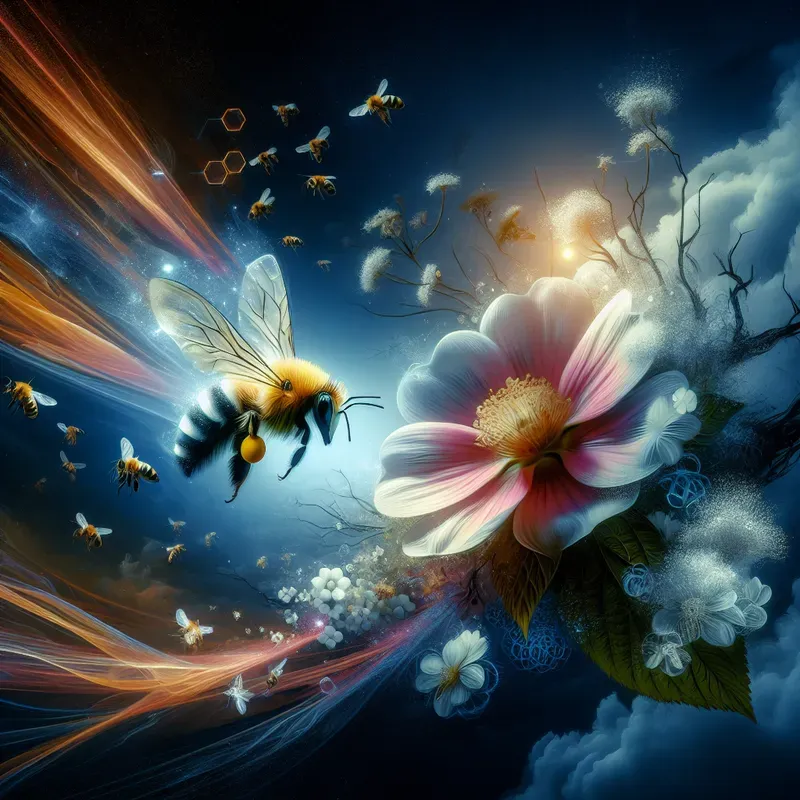
Illustration by DALL·E 3
- What: The survival of certain flowering plants is intricately tied to the existence of specific endangered pollinators.
- Where: Global ecosystems
- When: Present day
- How: Through exclusive dependencies that have evolved between plants and their pollinators.
- Why: These relationships highlight the urgent need for conservation as the decline of one species threatens the survival of another.
Can Extinction Unravel Nature's Intricate Tapestry?
Imagine a world where the survival of a vibrant flower hinges on the existence of a single, endangered bee species. Data on plant-pollinator specificity reveals astonishing dependencies that defy conventional understanding of ecological balance. Strikingly, certain plants have evolved to depend solely on specific pollinators that themselves face extinction, creating a precarious boundary condition that challenges our perceptions of mutual benefit. How do we comprehend this fragile web of life where one species’ decline could unravel another's bloom?
Unearthing Nature's Fragile Dependencies
In the realm of pollination ecology, the relationships between plants and their pollinators reveal a complex tapestry woven with threads of interdependence and vulnerability. The anchor of this journey lies in the intricate data gathered on plant-pollinator specificity and decline rates, illustrating that some flowering plants possess an exclusive reliance on particular pollinators. This is not merely a story of coexistence; it is a high-stakes drama where one player's extinction spells doom for another. Researchers note that as the populations of these unique pollinators dwindle, many plant species face an uncertain fate. The survival of these plants, which have adapted to depend solely on their dwindling partners, mounts an emotional tension that disrupts our understanding of ecological optimization.
Why These Relationships Matter Now
The implications of such delicate dependencies resonate deeply in today’s environmental conversations. In a recent examination of this critical relationship, researchers have highlighted the alarming rates of pollinator decline, with numerous species teetering on the brink of extinction. This jeopardizes not only the flowering plants but also the ecosystems that rely on them, amplifying the call for conservation efforts. The collision of these survival strategies—the resilient flower and the fragile bee—serves as a poignant reminder of nature's interwoven fate. It provokes our curiosity about what other extraordinary relationships are hiding in the natural world, waiting for their secrets to be uncovered.
Did You Know?
Over 75% of the world's flowering plants rely on animal pollinators for reproduction, underscoring the critical role these species play in our ecosystems.
Certain plants, like the elusive chocolate orchid, are so specialized that they depend solely on specific insects, making them particularly vulnerable to extinction.
If the decline of just one pollinator species can lead to the extinction of an entire plant, we are witnessing an ecological crisis with far-reaching consequences.
Keep Exploring
CurioWire continues to uncover the world’s hidden histories — one curiosity at a time.
Sources & References
- National Academy of Sciences
- World Wildlife Fund
- Royal Botanic Gardens