
🎭 Fragments from the heart of civilization
The Whispered Secrets Linking Divinity to Everyday Scandal
culturePublished 25 Nov 2025
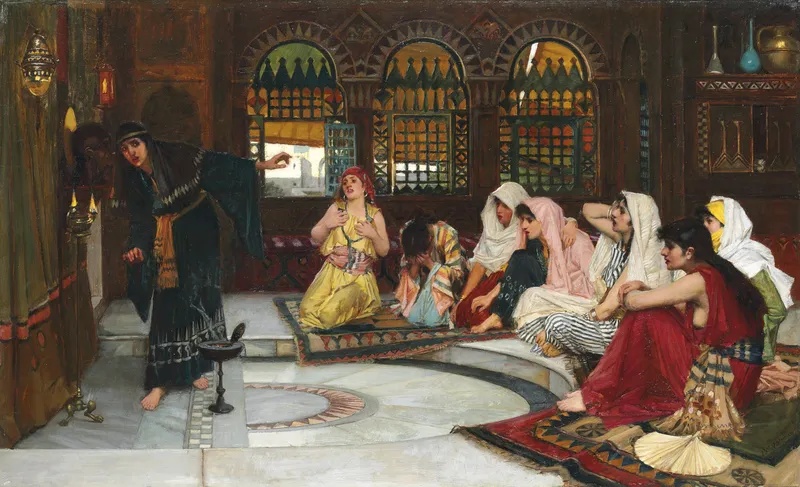
Image via Wikimedia Commons
- What: The Oracle of Delphi, revered in ancient Greece, served as a conduit between the divine and the mundane, delivering prophecies that would later intertwine with scandal.
- Where: Delphi, Greece
- When: 4th century BCE
- How: The Oracle, known as the Pythia, entered a trance induced by vapors to convey messages from Apollo.
- Why: This historical narrative illustrates the enduring tension between sacred truths and societal gossip, reflecting our ongoing quest for connection.
The Oracle's Voice Beneath the Whispering Pines
In the heart of ancient Greece, where the gentle breeze mingled with sacred incense, the Oracle of Delphi sat shrouded in mystery. Surrounded by the marbled ruins of the Temple of Apollo, she conjured whispers that drifted like smoke in the air. Sunlight filtered through the trees, illuminating the sacred site where pilgrims sought divine guidance. In the 4th century BCE, her prophecies, delivered in hushed tones to seekers from far and wide, were believed to bridge the realms of the mundane and the celestial. Yet these whispers, once revered as profound truths, would soon intertwine with a new narrative — one of scandal and suspicion.
The Sacred Rituals of Delphi and Their Cultural Significance
The Oracle of Delphi, heralded as the Pythia, served as a high priestess to the god Apollo until around the 4th century BCE. Pilgrims traveled from all corners of the Hellenic world, drawn to her enigmatic utterances. Traditionally, she would enter a trance, inhaling vapors from the earth before delivering her prophecies. This practice was steeped in ritual, emphasizing a deep-seated faith in divine communication. Within those whispers, seekers found both their fate and their community’s guidance. Yet, whispers possess a duality; within the sacred can linger doubt. As citizens began to witness instances of mundane gossip masquerading as divine insight, the very essence of truth began to fray, revealing the treacherous boundary between what is sacred and what is simply scandalous.
The Enduring Echo of Whispers in Modern Culture
This resonance persists today, as whispers continue to shape our modern experience, echoing through art, literature, and our communal psyche. We often equate whispers with gossip, a transformation that tarnishes their former sanctity yet amplifies their power in different ways. Contemporary art explores this duality; artists like Shirin Neshat employ whispers as a motif, revealing layered truths about identity and faith. Moreover, whispers remain a potent tool for connection — an intimate passage that evokes our deepest vulnerabilities. In this continuous evolution, we find an enduring wonder: the human need to connect, whether to the divine or to each other, remains timeless, anchored within the gentle murmur of a whisper.
Did You Know?
- Whispers were considered so sacred that the Oracle’s utterances were often transcribed by priests, turning them into cryptic texts interpreted long after her voice faded. - The Temple of Apollo at Delphi was believed to be the center of the world, marked by a stone called the Omphalos, symbolizing the connection between the earth and the divine. - In the late 19th century, archaeological excavations at Delphi uncovered thousands of offerings left by pilgrims, showcasing the cultural impact of seeking oracle guidance through the ages.
Keep Exploring
CurioWire continues to uncover the world’s hidden histories — one curiosity at a time.
Sources & References
- The Delphi Archaeological Museum — Greece
- “The Oracle of Delphi: A Cultural History” — Journal of Ancient History
- “Whispers of the Divine: The Role of the Pythia” — Classical Studies Review