
🌿 Stories carved by wind and water
Polar Bear Mothers Defy Logic in Survival Strategies
naturePublished 08 Jan 2026
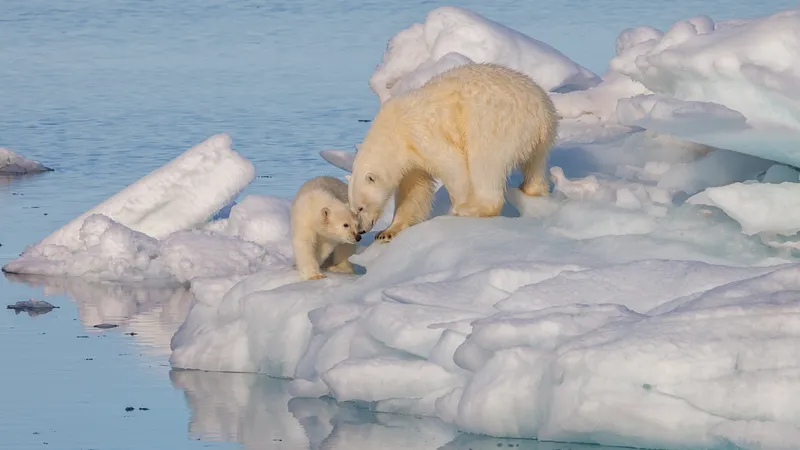
Image by AWeith — CC BY-SA 4.0
- What: Polar bear mothers invest more energy in raising cubs despite having less body fat, defying expectations of maternal care.
- Where: Arctic wilderness
- When: Contemporary studies
- How: Through longitudinal studies tracking maternal investment and survival strategies
- Why: It highlights the complex dynamics of survival in harsh environments and challenges assumptions about resource allocation.
Unseen Sacrifices in the Arctic Wilderness
In the bleak expanse of the Arctic, where the cold bites and resources dwindle, an astonishing truth about polar bear mothers unfolds. Longitudinal studies tracking maternal investment reveal that mothers with less body fat paradoxically pour more energy into raising their cubs than their well-fed counterparts. What drives this counterintuitive behavior, and how does it illustrate the nuances of survival in an environment defined by scarcity?
Astonishing Maternal Behavior Amid Scarcity
The survival strategies of polar bears exemplify fierce adaptations wrought by the harshness of their environment. In these longitudinal studies, researchers document how maternal investment, a vital lifeline for cub survival, evolves under challenging conditions. When resources are limited, it appears that these mothers push themselves beyond typical limits, perhaps in a primal attempt to ensure the continuation of their lineage amidst an ever-changing climate. This unexpected trend challenges the notion that energy reserves equate to better parental care. Instead, what was once considered a straightforward equation of resource availability has transformed into a complex web of behavioral choices. When food is plentiful, mothers might be tempted to conserve energy or invest less heavily in each cub given their own comfort. However, the bears demonstrate that when survival hangs by a thread, the slightest imbalance—like diminished body fat—can ignite an instinctual drive to invest more heavily in nurturing. This phenomenon evokes discomfort and awe, prompting us to reconsider the assumptions we carry about efficiency and optimization in nature. The struggle for life becomes not just a matter of having enough but also of responding dynamically to what is available. Each bear raises her cubs while teetering on the edge of endurance, revealing a stark realization: in the crucible of scarcity, maternal dedication is driven by a compelling mix of survival instincts and deep-rooted biological imperatives.
Resonance with Today’s Challenges
This remarkable adaptability resonates beyond the realm of polar bears. As climate change reshapes habitats and alters food sources across the globe, the lessons drawn from these Arctic survivors find relevance in our own interactions with the environment. When faced with scarcity, living things, much like polar bear mothers, may show extraordinary resilience and adaptability. Ongoing research continues to observe these dynamics, reminding us that the wild is defined not just by its dangers but by its capacity for unexpected strategies. As we navigate our own ecological crises, the polar bear serves as a symbol of how survival often defies expectation, urging us to ponder what it truly means to thrive against the odds. Could it influence our understanding of adaptation in a world where stability is increasingly uncertain?
Did You Know?
Polar bear mothers can lose up to 50% of their body fat during nursing, illustrating the extreme demands of motherhood in harsh climates.
Research indicates that cubs raised in leaner maternal conditions may develop stronger survival skills, forging resilience out of scarcity.
Polar bears are the world’s largest carnivorous land mammals, yet their survival strategies often challenge assumptions about mammalian parenting and energy allocation.
Keep Exploring
CurioWire continues to uncover the world’s hidden histories — one curiosity at a time.
Sources & References
- National Snow and Ice Data Center
- Journal of Wildlife Management
- Arctic Research Consortium