
🧪 Echoes from the lab
The Human Eye: Unlocking the Secret of About 10 Million Colors
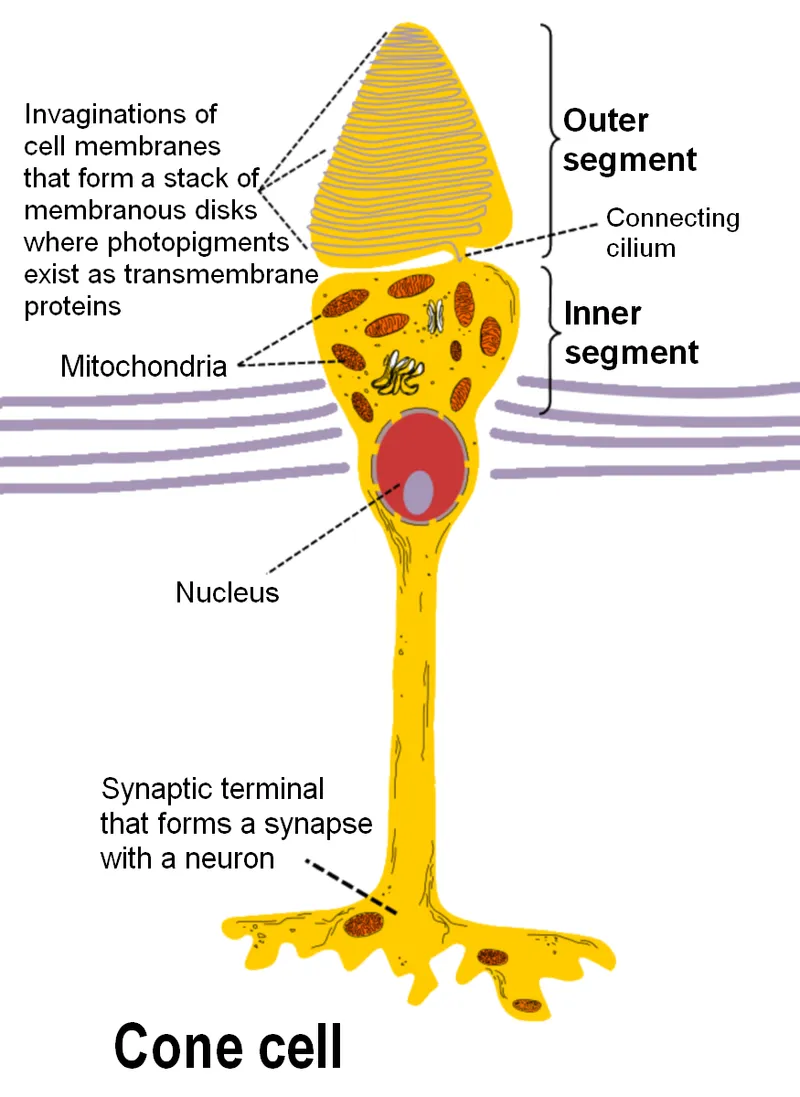
- What: The human eye can distinguish about 10 million different colors due to the interaction of three types of cone cells in the retina.
- Where: In the human eye.
- When: Contemporary understanding of biology.
The human eye is a marvel of biology, capable of seeing an astonishing range of colors. Scientists estimate that we can distinguish about 10 million different hues. But how does this work?
It all comes down to cone cells, the photoreceptors in our retinas. There are three types of cones, each sensitive to different wavelengths of light: short, medium, and long. These cones interact with light to create the vibrant spectrum we experience.
When light enters the eye, it stimulates these cones in varying combinations. For example, when both medium and long cones are activated, we might perceive a shade of green. The brain processes this information, allowing us to see colors as we know them.
But it’s not just about wavelengths. The context in which we see colors plays a crucial role, influenced by surrounding colors and lighting conditions. This complex interaction makes our color perception a fascinating subject of study.
Imagine standing in a field of flowers, each bloom a different shade. The subtle differences in color are a testament to the intricate workings of your eyes. This ability to perceive such variety is not just a biological feat; it enhances our experience of the world.
Did You Know?
The human eye can detect light in wavelengths roughly from about 380 nanometers (violet) to about 750 nanometers (red).