
🌿 Stories carved by wind and water
The Mimic Octopus Doesn't Just Hide. It Becomes Something Else.
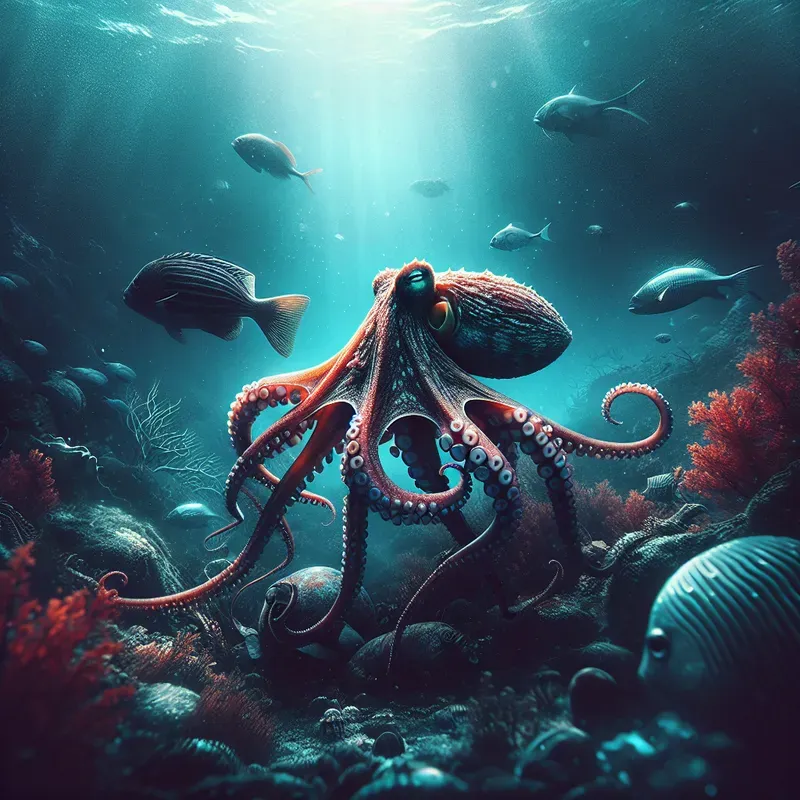
- What: The mimic octopus defends itself by camouflaging and by impersonating other animals such as lionfish, flatfish, and sea snakes.
- Where: Warm waters of the Indo-Pacific.
- When: First widely documented in 1998.
The mimic octopus stands out for a rare kind of defense: instead of relying only on camouflage, it can imitate other animals. In the warm waters of the Indo-Pacific, this cephalopod has been observed taking on the appearance and movement of multiple marine species, with reports often citing around 15 examples. That makes it notable not just as a well-camouflaged hunter, but as an animal that appears to choose among different disguises.
Mimic Octopus Defense Strategy
Like other octopuses, it can shift color and alter the texture of its body to blend into the seafloor. But its most striking behavior begins when blending in may not be enough. It can stretch, flatten, and arrange its arms to resemble other creatures that predators would rather avoid. The point is not a perfect copy. The point is to send a convincing warning.
Imitating Lionfish, Flatfish, and Sea Snakes
One of the best-known examples is its lionfish imitation. The octopus lifts and spreads its arms in a way that suggests the fish’s venomous spines. In other cases, it has been described mimicking flatfish or sea snakes, changing both posture and movement to match the role. That combination matters. A still shape might go unnoticed, but a moving imitation can make the deception far more believable.
Why the Mimic Octopus Stands Out
This is what makes the species so compelling. Many animals disappear into their surroundings. The mimic octopus goes a step further by borrowing the identity of animals that carry their own built-in defenses. It is less a master of invisibility than a specialist in misdirection.
The species was first widely documented in 1998, which helps explain why it still feels like a relatively recent addition to popular marine biology. Researchers continue studying how it uses mimicry and in what situations it switches from camouflage to impersonation. Even with what has already been observed, the mimic octopus offers a sharp example of how survival in the ocean can depend not just on hiding, but on becoming the wrong target entirely.
Did You Know?
The mimic octopus is scientifically named Thaumoctopus mimicus.