
🧪 Echoes from the lab
How Wood Frogs Survive Being Frozen Solid
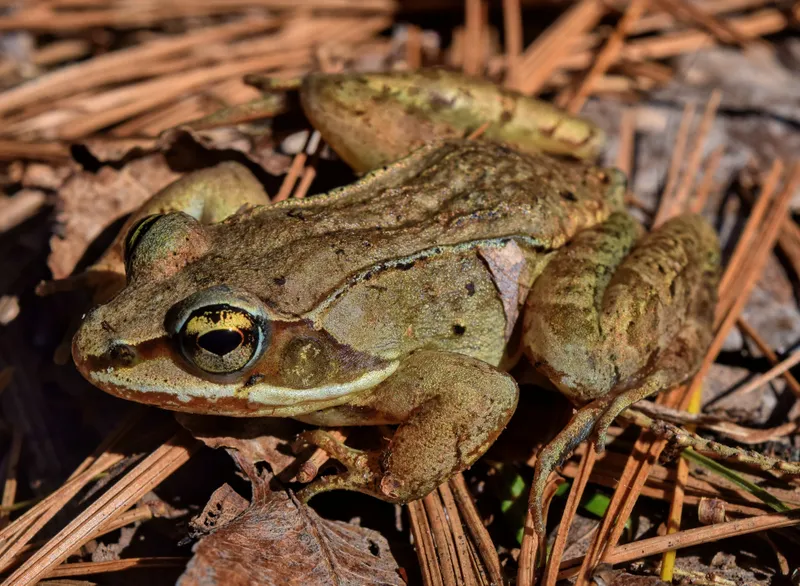
- What: The wood frog can survive being frozen solid and then thaw out in spring, thanks to its unique biology.
- Where: Cold regions of North America.
- When: Winter.
Imagine a creature that can literally freeze solid yet come back to life. Meet the wood frog, a remarkable amphibian found in the cold regions of North America.
When winter hits and temperatures plummet, these frogs face a daunting challenge. Rather than migrating, wood frogs enter a state of suspended animation. They can survive being frozen for weeks on end, their bodies turning into ice.
But how do they do it? The secret lies in their unique biology. When temperatures drop, wood frogs produce a natural antifreeze that helps protect their cells from freezing damage. This antifreeze is glucose that acts like a protective shield, allowing their organs to remain intact.
During this frozen state, their heart stops, and metabolic activity drops to nearly undetectable levels. They appear lifeless, but it’s all part of nature’s survival strategy. As soon as temperatures rise in the spring, the wood frogs thaw out and resume their normal activities as if nothing happened.
This incredible adaptation not only showcases the resilience of life but also opens doors for scientific exploration. Researchers are studying these frogs to learn more about cryopreservation, which could have implications for medicine and preserving human organs.
Consider the wood frog, a true champion of endurance in the face of freezing temperatures.
Did You Know?
Wood frogs can survive temperatures as low as -6 degrees Celsius (21 degrees Fahrenheit) while frozen.