
🚀 Whispers from the silent cosmos
A Teaspoon of Neutron Star Weighs Billions of Tons
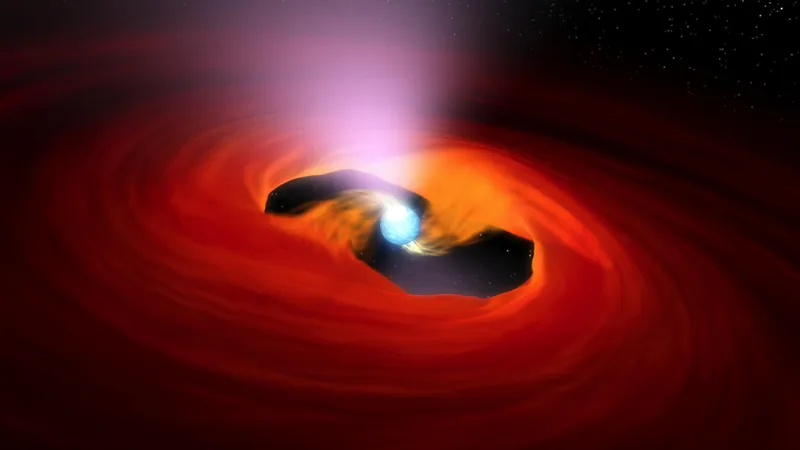
- What: Neutron stars are incredibly dense remnants of massive stars, with a teaspoon of their material weighing on the order of billions of tons.
- Where: In the universe, specifically in regions where massive stars have exploded.
- When: After supernova events, when massive stars collapse.
Imagine holding a teaspoon of something so dense it could weigh billions of tons. This isn’t a fantasy; it’s the reality of neutron stars, the remnants of massive stars that have exploded in supernovae.
Neutron stars are incredibly compact, packing more mass than our Sun into a sphere just 20 kilometers wide. This extreme density occurs because the core of the star collapses under gravity, forcing protons and electrons to combine into neutrons.
To put this in perspective, a single teaspoon of neutron star material could weigh more than all the cars on Earth combined. The sheer force of gravity on a neutron star is so intense that it warps space-time itself.
Scientists estimate that a neutron star has a density of around 400 million tons per cubic centimeter. That’s equivalent to cramming a mountain’s worth of material into a volume smaller than a sugar cube.
As awe-inspiring as they are, neutron stars also present mysteries that intrigue astronomers. They spin at incredible speeds, some rotating hundreds of times per second. This rapid rotation, combined with their intense magnetic fields, creates powerful beams of radiation that can be detected across the universe.
While a teaspoon of neutron star material represents an unimaginable weight, it also illustrates the extreme and bizarre nature of our universe, where the laws of physics push the boundaries of what we think is possible.
Did You Know?
Neutron stars can have magnetic fields that are a trillion times stronger than Earth's magnetic field.