
🚀 Whispers from the silent cosmos
How the Universe's First Stars Ignited
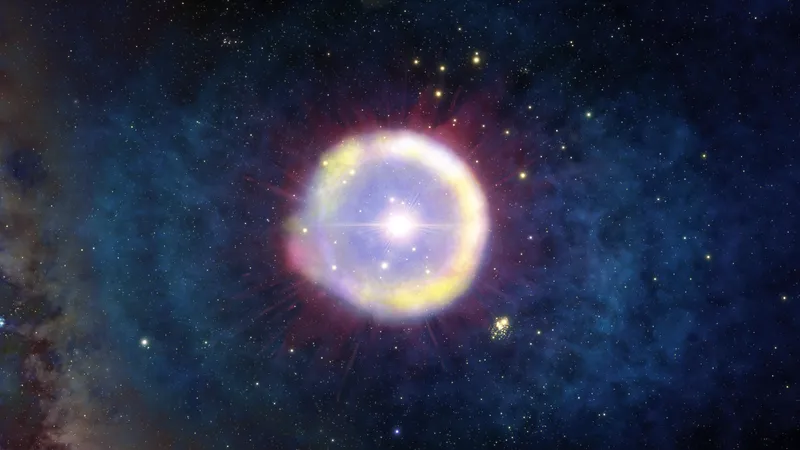
- What: Population III stars were the first generation of stars in the universe, forming from primordial gas and playing a crucial role in creating heavier elements.
- Where: The universe.
- When: More than 13 billion years ago.
Imagine a time when the universe was a dark, empty expanse. Before galaxies, planets, and starlight, there existed only primordial gas, primarily hydrogen and helium.
These elements, formed just moments after the Big Bang around 13.8 billion years ago, were the building blocks for what we now call Population III stars.
These stars were the universe's first generation, igniting fusion in their cores when temperatures soared to millions of degrees. They were colossal, with some estimated to be hundreds of times the mass of our Sun.
As they burned brightly, they began to change the cosmos forever, producing heavier elements through nuclear fusion. This process led to the creation of the very elements that would later form planets, life, and everything we know.
But their lifespans were short. After millions of years, many of these massive stars exploded in supernovae, scattering their enriched remnants across the universe.
This stellar recycling was crucial, seeding the cosmos with the elements necessary for future generations of stars and planets. Without these first stars, our universe would be a very different place.
Did You Know?
Population III stars are theorized to have been so massive that they may have formed black holes directly upon their collapse, rather than going through a supernova phase.