
🚀 Whispers from the silent cosmos
How Black Holes Slow Down Time: The Science Explained
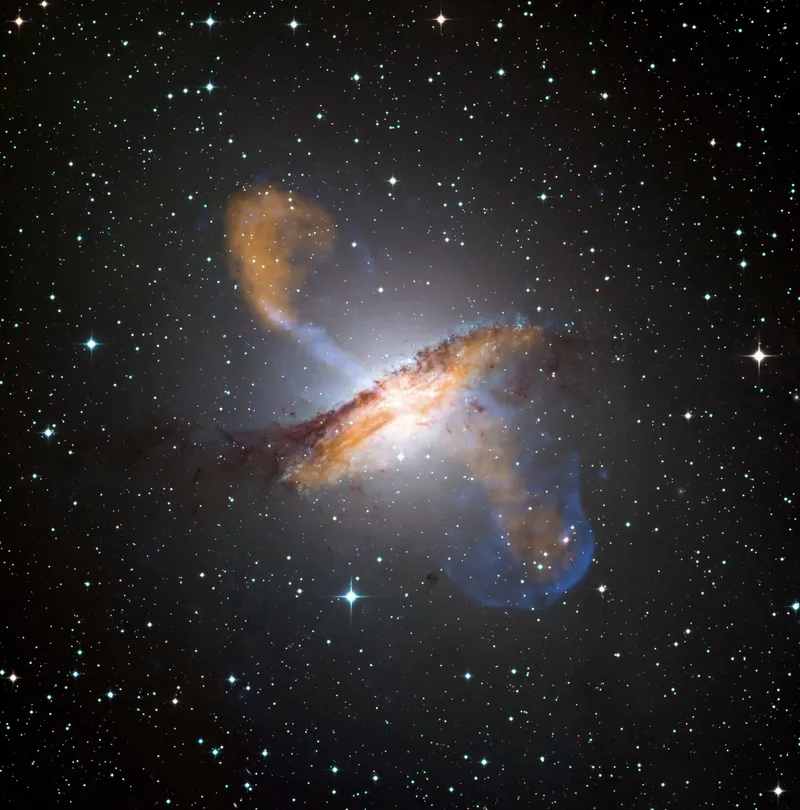
- What: Time dilation occurs near black holes due to their immense gravitational pull, causing time to pass more slowly for those close to them.
- Where: Near black holes.
- When: Current scientific study.
Imagine a place in space where time behaves differently. It sounds like science fiction, but near a black hole, time actually slows down.
This phenomenon is known as time dilation, and it occurs because of the black hole's immense gravitational pull.
As you get closer to a black hole, the gravitational forces become so strong that they warp the very fabric of space and time.
According to Einstein's theory of relativity, the closer you are to a massive object, the slower time passes for you compared to someone far away.
For instance, if you were to orbit a black hole for hours, much more time—potentially years—could pass for someone observing from a safe distance.
This effect is most pronounced at extreme proximity, making it a fascinating yet dangerous realm of the universe.
While we can't yet observe this firsthand, scientists are studying the edges of black holes to uncover more about these cosmic time warps.
Did You Know?
Many black holes are formed when massive stars collapse under their own gravity at the end of their life cycle.