
🌿 Stories carved by wind and water
Why Fireflies Glow, Flash, and Sometimes Fade from View
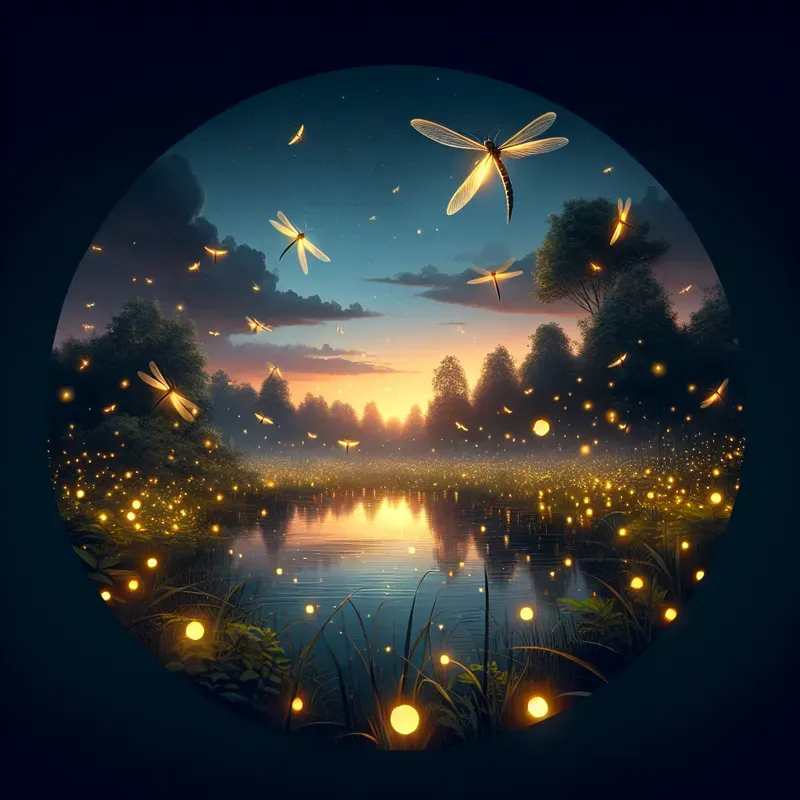
- What: Fireflies make light through a luciferin-luciferase reaction in abdominal lanterns, and their species-specific flash patterns help them communicate and find mates.
- Where: Warm evenings in fields, lawns, and gardens.
- When: Summer nights.
A warm evening can turn strange very quickly once the first fireflies appear. What looks like a soft flicker over a lawn or field is actually a tightly controlled signal, made inside the insect’s body and timed with surprising precision.
How Fireflies Produce Light
Fireflies produce light through a chemical reaction involving luciferin and luciferase. The reaction happens in specialized organs in the abdomen, often called lanterns. The result is bioluminescence: light generated by the insect itself rather than reflected from the environment. It may seem ornamental, but for many fireflies the flashes are functional first. Light is part of how they find one another and identify the right mate.
Flash Patterns and Species Signals
That’s where the display becomes more complex. Fireflies do not simply switch on and glow at random. Different species are known for distinctive flash patterns, and those rhythms matter. A pulse that seems casual to a human observer can be a specific signal to another firefly nearby. Fields and gardens on summer nights can hold several of these coded exchanges at once, overlapping in the dark.
The brightness and timing are not fixed, either. Environmental conditions can affect what people see. Temperature and humidity, in particular, can influence flashing behavior, and humid nights may bring more frequent displays. That means the familiar summer light show depends not only on the insects themselves, but also on the conditions around them. The spectacle is chemical, behavioral, and environmental all at once.
Why Fireflies Fade From View
There is also a common misconception buried in the name. Fireflies are not flies at all. They are beetles, members of the family Lampyridae, using light in ways that are both efficient and highly specialized.
Seen up close, the appeal of fireflies is not just that they glow. It is that each flash is doing a job: carrying information through warm air, under shifting weather conditions, in a signal system that works only when the night and the habitat still allow it to be seen.
Did You Know?
Some fireflies can control how long and how often they flash to match the signaling pattern of their own species.