
🧩 Fragments from the unknown
The Voynich Manuscript: A Real Book with an Unknown Text
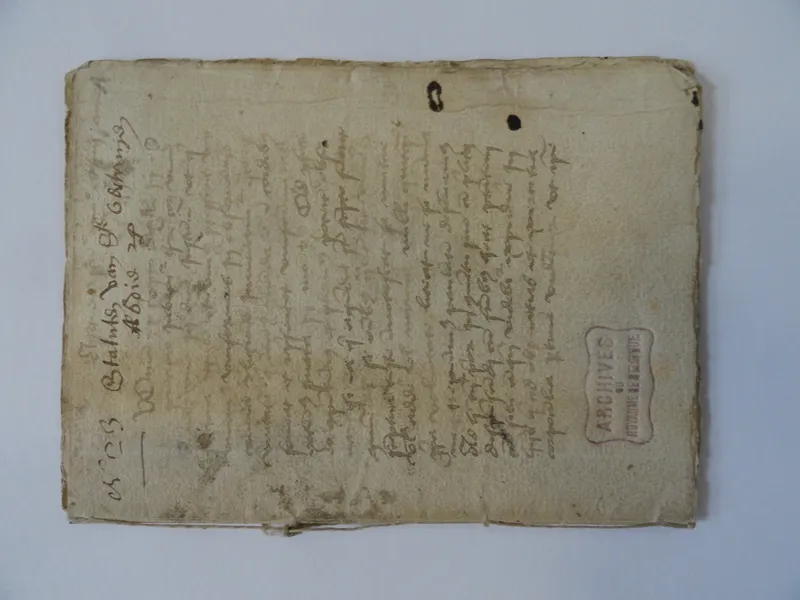
- What: The Voynich Manuscript is a real medieval book with unreadable text and puzzling illustrations that has resisted definitive decipherment for centuries.
- Where: Originally associated with a villa near Rome when Wilfrid Voynich acquired it.
- When: Generally dated to the early 15th century; acquired by Voynich in 1912.
The Voynich Manuscript is not a legend or a lost rumor. It is a surviving physical book, generally dated to the early 15th century, filled with dense writing in a script no one has securely read. Its pages also carry detailed but puzzling images: plants that do not clearly match known species, circular diagrams that resemble astronomical or astrological charts, and scenes with nude figures moving through strange tube-like structures and pools.
That combination is what keeps the manuscript in circulation as a serious mystery rather than a novelty. The book exists. It has a material history. Yet its text has resisted translation for centuries. Linguists, historians, and codebreakers have all tried to pin it down as a language, a cipher, a hoax, or some mixture of the three. None of those efforts has produced a reading accepted as definitive.
Unreadable Text and Strange Illustrations
Part of the problem is structural. There is no confirmed key, no bilingual version, and no agreed-upon reference point that would let researchers test a translation against something solid. The writing appears organized rather than random, which is one reason many people have treated it as meaningful text. But meaningful is not the same as readable, and every proposed solution has run into doubts about method, evidence, or consistency.
The manuscript takes its modern name from Wilfrid Voynich, the rare book dealer who acquired it in 1912 at a villa near Rome. That moment did not begin the mystery, but it gave the book a public identity and drew wider attention to its unreadable pages. Since then, it has moved through scholarship as much as through ownership, with each generation bringing a new set of tools and a new theory about what sort of document it might be.
Wilfrid Voynich and the Manuscript's History
Some interpretations cast it as a medical or pharmaceutical work. Others lean toward astrology or natural knowledge. Those ideas are not baseless; they grow out of the manuscript’s imagery. But the pictures cannot settle what the text says, or even whether the book belongs neatly to one category at all. The illustrations guide interpretation just enough to encourage argument, not enough to end it.
Modern computing has not closed the case. Statistical analysis, pattern matching, and newer AI-based approaches have all been brought to the manuscript with renewed confidence, and none has produced a consensus decipherment. That is why the Voynich Manuscript remains compelling. It is not simply obscure. It is a documented object from the past that still withholds its most basic information: what language it records, what it is for, and whether anyone living today can actually read it.
Did You Know?
The manuscript is currently held by Yale University’s Beinecke Rare Book & Manuscript Library.