
🫀 Secrets of the human vessel
Why 206 Bones Isn't the Whole Story
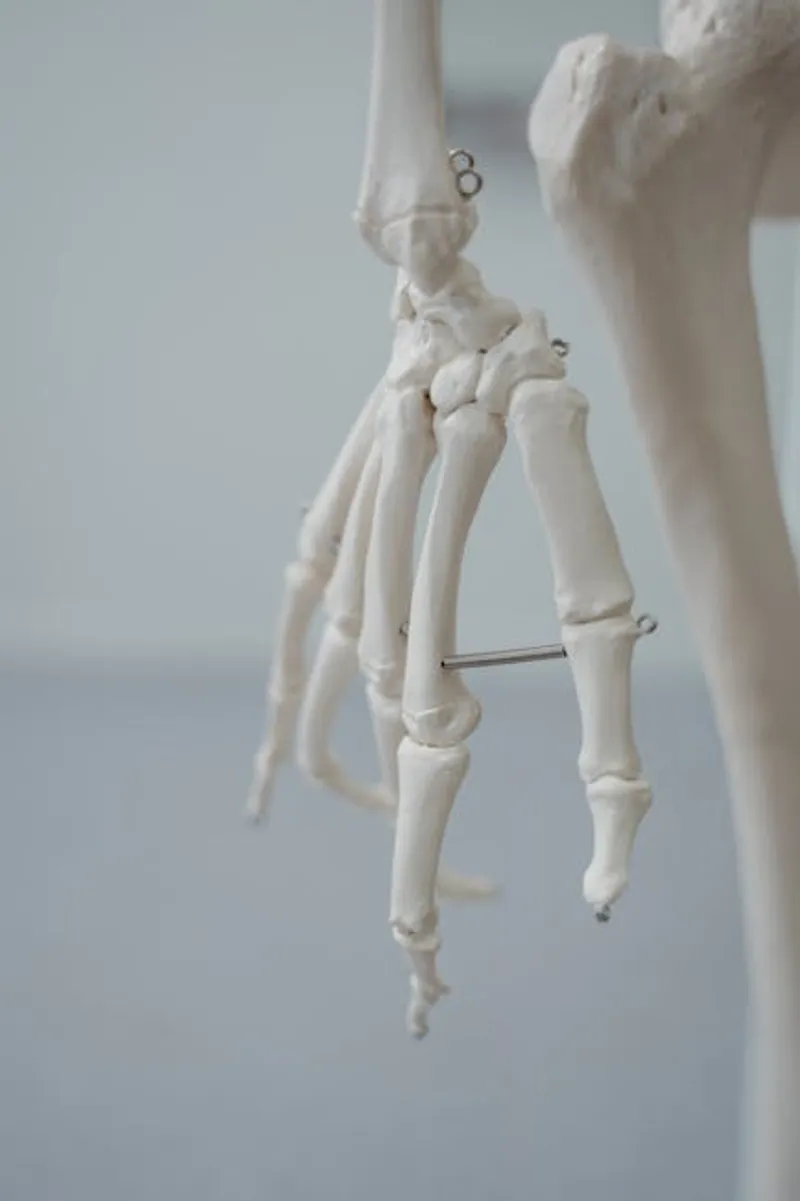
- What: The adult human skeleton is usually described as having about 206 bones, but that number changes as children grow and some bones fuse or vary slightly between people.
- Where:
- When:
The number most people learn is simple: the adult human body has about 206 bones. The reality is a little less tidy. That familiar count describes a typical fully developed skeleton, not a fixed number that stays the same throughout life.
Bone Count Changes With Age
Early on, the skeleton is still being assembled. In babies and children, some parts that later become single bones begin as separate pieces. At the same time, the areas that allow bones to grow in length are still open. Over childhood and adolescence, those pieces gradually join together, and growth slows as development finishes.
That is why the number changes with age. Newborns are often said to have around 270 bones, with many of them eventually fusing. By the late teens or early twenties, after the growth process is largely complete, the average count settles near 206.
Why Adults Do Not Match Exactly
Even then, 206 is still an average, not a rule without exceptions. Some people have small extra bones in the hands or feet, or variations such as an extra rib. Those differences do not make a skeleton abnormal in any dramatic sense, but they do mean that two adults do not always have the exact same total.
The Skeleton Keeps Changing
The misconception is that bones are a static set, as if the skeleton arrives pre-counted and never changes. In practice, the skeleton is a developing structure with parts that grow, merge, and sometimes vary from person to person. The well-known number is useful, but it smooths over a more dynamic picture. A skeleton is not just a framework of 206 pieces. It is the record of how a body grew into itself.
Did You Know?
The human skull is made up of multiple bones that fuse together over time, which is part of why the bone count changes from infancy to adulthood.