
🧪 Echoes from the lab
How the Wood Frog Survives While Partly Frozen
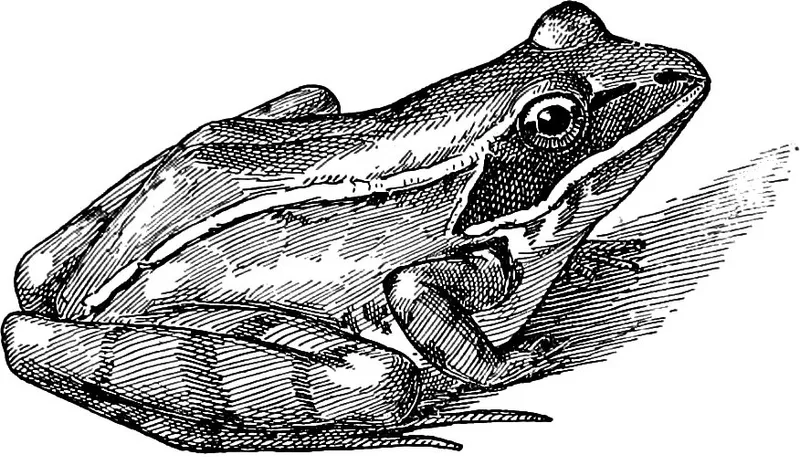
- What: The wood frog can survive being frozen by letting ice form outside its cells while protecting its tissues with glucose and urea until it thaws.
- Where: North American winter forests.
- When: During winter, when temperatures stay below freezing.
A wood frog in a North American winter can do something that sounds fatal: it can freeze and still survive. For days at a time, its body can become rigid and motionless while temperatures stay below freezing.
Ice Outside the Cells
That does not mean every part of the frog turns to damaging ice. The key is where the ice forms. As the animal cools, ice develops outside its cells, not inside them. That distinction matters. Ice crystals inside cells can rupture membranes and destroy tissue. Outside the cells, the danger is more manageable.
The frog’s chemistry shifts quickly as freezing begins. Its tissues become loaded with glucose and urea, which act as cryoprotectants. These compounds help limit the damage freezing would otherwise cause, reducing how much water leaves cells and helping protect cellular structures during the frozen state.
How the Frog Survives Thawing
The result is a kind of suspended function. The frog is not active in any ordinary sense while frozen, but it is not dead. It remains in this condition until temperatures rise enough for thawing. Then, if the process has stayed within the limits the animal can tolerate, the frog can recover and resume normal activity.
A common misconception is that the wood frog survives by avoiding freezing altogether. It does not. Its strategy is almost the opposite: it tolerates freezing in a controlled way. By allowing ice outside its cells while protecting the cells themselves with high levels of glucose and urea, it gets through conditions that would kill most other frogs.
A Winter Survival Strategy
That makes the wood frog less an exception to winter than a specialist in it. In frozen forests, survival does not always depend on staying warm. In this case, it depends on controlling what freezes, what stays protected, and how the body endures the wait for thaw.
Did You Know?
Wood frogs can freeze and thaw repeatedly across the winter and still survive, as long as conditions remain within their tolerance.