
🛍️ Artifacts of human ingenuity
Why Wrist Fitness Trackers Can Miss Your Real Heart Rate
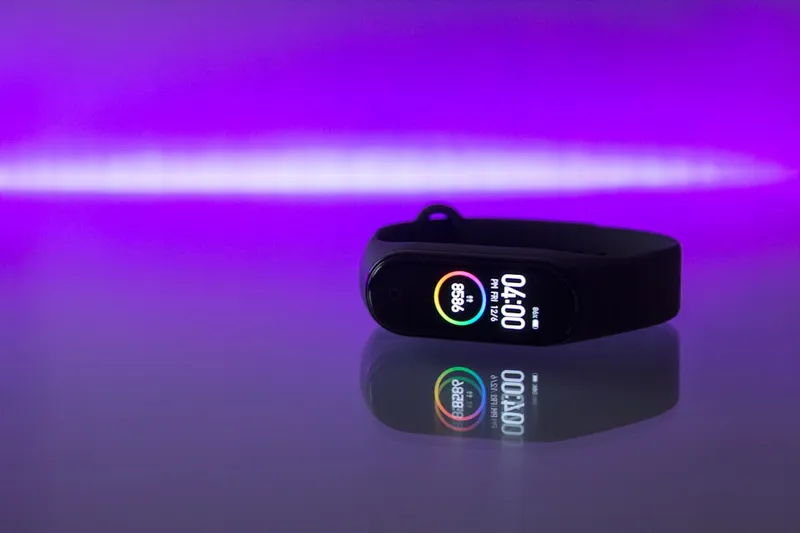
- What: Wrist-based fitness trackers estimate heart rate with optical sensors, but their readings can become less accurate during intense or erratic exercise because motion and fit affect the signal.
- Where:
- When:
Fitness trackers are built to make heart rate feel simple: strap one on, start moving, check the number. But wrist-based monitors do not measure the heart directly. Most rely on optical sensors that look for tiny changes in blood flow under the skin, and that method can become less reliable once a workout gets fast, forceful, or uneven.
The main problem is motion. During intense exercise, the wrist is rarely still. Arm swings, gripping, jumping, and sudden changes in pace can introduce what researchers call motion artifacts, signals the device may mistake for a pulse pattern or struggle to separate from it. A tracker can keep producing a clean-looking number even when the underlying reading is shaky.
Why Motion Affects Accuracy
That matters because the error does not always show up in obvious ways. In a hard interval session, for example, someone may feel their effort rising sharply while the watch reports a heart rate that looks steady or only mildly elevated. The issue is not necessarily that the device is broken. It is that wrist-based optical sensing has conditions where it performs better and conditions where it performs worse.
Research has suggested that accuracy tends to drop during vigorous activity, especially when movement becomes more erratic. Fit also matters. If the sensor is not sitting securely against the skin, readings can drift. Temperature, skin characteristics, and workout conditions may also affect how consistently the optical signal is captured. That helps explain why the same tracker can seem dependable on a walk and much less convincing during sprints or circuit training.
When Wrist Trackers Struggle
A common misconception is that a heart-rate number is equally trustworthy in every situation as long as it appears instantly on screen. In practice, these devices are often better at showing general trends than capturing every moment of high-intensity effort with precision. For everyday tracking, that may be enough. For workouts where exact heart-rate zones matter, the wrist is not always the most dependable place to measure from.
The practical takeaway is not to stop using a fitness tracker, but to read it in context. A heart-rate display during demanding exercise can be useful, but it is not immune to the mechanics of movement, fit, and sensor limitations. Treating the number as an estimate rather than a flawless live measurement is usually the more accurate way to understand what the device is actually telling you.
Did You Know?
Chest strap heart-rate monitors are generally used as a more accurate reference because they measure the heart’s electrical activity rather than blood flow at the wrist.