
🌿 Stories carved by wind and water
Australian Firehawks May Use Burning Sticks to Flush Out Prey
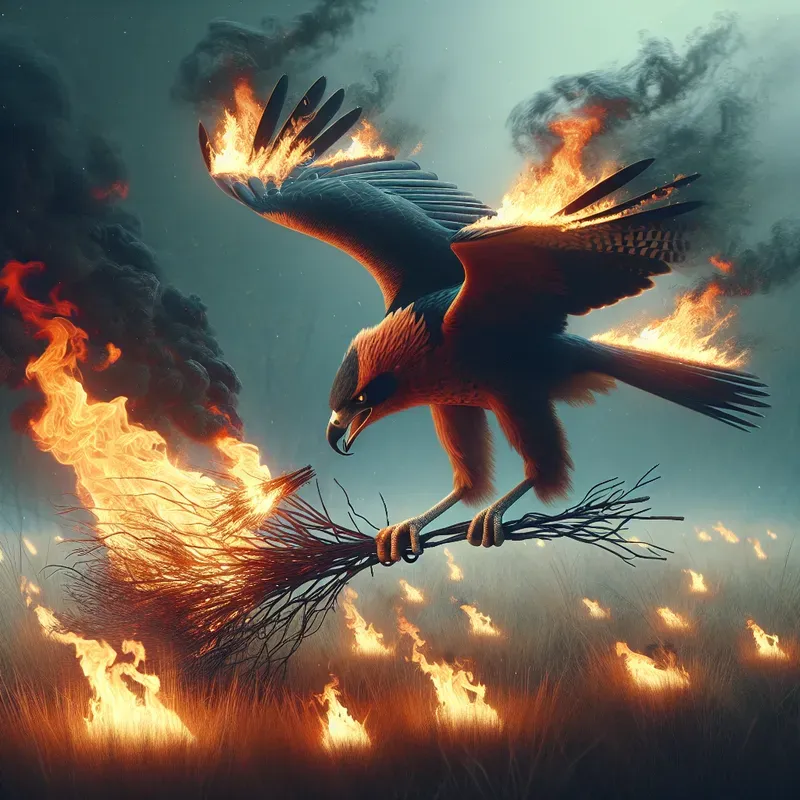
- What: Reports and observations suggest some northern Australian raptors, such as black kites and whistling kites, may pick up smoldering sticks and move fire to flush prey and improve hunting opportunities, though the behavior is still not fully understood.
- Where: Northern Australia, around grassfires and active fire fronts.
- When:
Some raptors in northern Australia appear to do something unusually strategic around grassfires: they pick up smoldering sticks and move them. Reports and observations have linked this behavior to birds such as black kites and whistling kites, which gather near active fire fronts where small animals are already under pressure.
How Firehawks May Hunt
The idea is simple, even if the behavior is still not fully understood. A bird carries a burning twig or grass stem, drops it into unburned ground, and a new patch of fire can start. That fresh burst of flame sends insects, reptiles, and small mammals scrambling for cover. For a fast, opportunistic hunter, that confusion can create an opening.
Researchers who have collected these accounts have suggested the behavior may be learned rather than accidental. The birds are not just feeding near fire, which many species do. The more striking claim is that some individuals seem to relocate fire itself in ways that improve hunting conditions. That is why the “firehawk” label has drawn so much attention.
Evidence and Uncertainty
At the same time, the evidence is discussed carefully. Observers have described the behavior, and it fits what these raptors are known for: flexible hunting, quick response, and close attention to disturbance. But exact intent is difficult to prove in wild animals, and not every bird near a blaze is using fire this way. The point is not that raptors have mastered fire in a human sense. It is that they may be exploiting it more actively than most people expect.
Why It Matters
That distinction matters. Wildfire is usually treated as background to animal behavior, something creatures endure or opportunistically feed around. These Australian raptors suggest a narrower, more provocative possibility: for at least some birds, fire may also be part of the hunt. If that interpretation holds, they are not merely following flames across the landscape. They are, in limited but consequential ways, helping move them.
Did You Know?
Black kites are also known to scavenge around fires, which is why they are among the birds most often linked to this behavior.