
🎭 Fragments from the heart of civilization
Why Venice Cast a Ring Into the Adriatic on Ascension Day
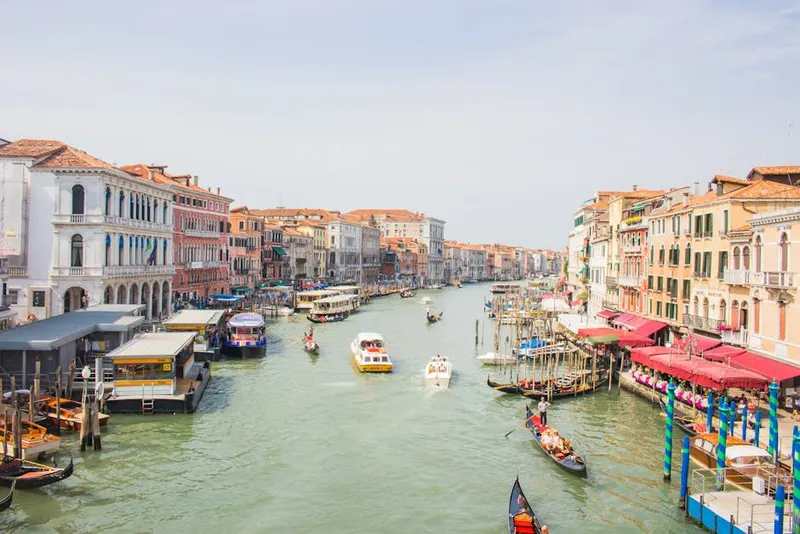
- What: Venice’s Sposalizio del Mare was an annual ceremonial ring-throwing ritual that publicly expressed the republic’s special bond with and asserted control over the Adriatic Sea.
- Where: Venice and the Adriatic Sea.
- When: Historically in the Venetian Republic, on Ascension Day.
Traditionally on Ascension Day, Venice made one of its clearest political statements on the water. The doge boarded a ceremonial ship, sailed out from the city, and threw a ring into the Adriatic. The act was brief, public, and highly formalized. It was known as the Sposalizio del Mare, the Marriage of the Sea.
The Marriage of the Sea
The ceremony was not a quaint expression of civic feeling. Venice depended on maritime routes for trade, transport, and security, and the ritual gave that dependence an official language. By framing the relationship as a marriage, the republic presented its connection to the Adriatic as stable, legitimate, and publicly recognized. The sea was not treated as a backdrop to Venetian life. It was cast as something joined to the state by right and custom.
The Ring as State Theater
The ring made that claim easy to read. In ordinary use, a ring marked a bond acknowledged by others. Here, the same symbol was turned outward as state theater. Casting a golden ring into the water suggested permanence, but it also carried a harder point. Venice was not simply admitting that it lived by the sea. It was asserting a privileged standing over it, and over the maritime world that moved through the Adriatic.
Venice’s Maritime Identity
The tradition is often linked to 1177, though origin stories of state ceremonies are not always as tidy as later retellings suggest. What matters more is that the rite became one of the republic’s most recognizable annual performances. Its power came from repetition and visibility. Religion, government, and spectacle were compressed into a single event that large audiences could witness. Venice’s maritime identity was not left as an obvious fact of geography or commerce. It was enacted on schedule by the head of state.
That public staging is what made the ritual politically useful. Venice turned economic reality into ceremony and gave strategic dependence the appearance of sanctioned order. The modern Festa della Sensa still preserves a symbolic ring-throwing rite, but in the historical republic the message was sharper. The ceremony did not just honor the sea. It declared, year after year, that Venice claimed a special and lawful bond with the Adriatic.
Did You Know?
The modern Festa della Sensa in Venice still includes a symbolic ring-throwing ceremony.