
🌿 Stories carved by wind and water
Aldabra Giant Tortoises Are Being Used to Restore Seychelles Habitats
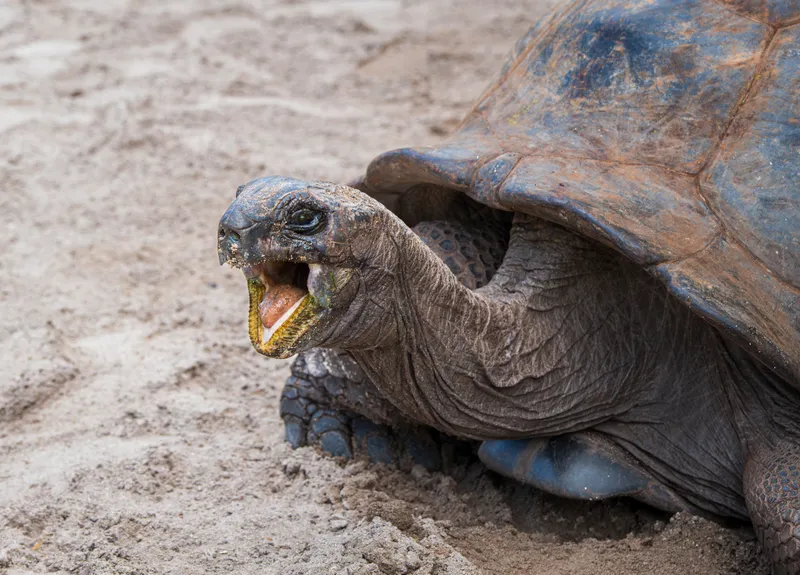
- What: Conservationists are relocating Aldabra giant tortoises to help manage vegetation through grazing, opening up habitat, and possibly spreading seeds.
- Where: Seychelles.
- When:
Aldabra giant tortoises have been moved to islands in Seychelles for a practical reason: their feeding behavior can change how vegetation grows. Conservationists are using them as a form of habitat management, especially in places where dense plant growth can limit light, crowd out other species, and reduce the mix of habitats available on the ground.
The basic idea is simple. A very large grazer does not just eat plants; it changes structure. As tortoises feed on grasses, low shrubs, and fallen fruit, they can open up patches of land that would otherwise remain thick with vegetation. That creates different conditions across the landscape, including more exposed ground and more light reaching lower layers of plants.
How Tortoises Shape Vegetation
In Seychelles, that matters because small islands can shift quickly when one kind of vegetation starts to dominate. Reintroducing a large herbivore is one way to restore an ecological process that has been missing or reduced. Instead of relying only on cutting or clearing by hand, conservationists can use an animal whose normal behavior already does some of that work.
The tortoises may also help move seeds. After eating fruit and other plant matter, they can deposit seeds in new places as they travel. That does not guarantee successful growth, but it increases the chances that some plants will spread beyond where they first fell. On an island system, even that kind of slow redistribution can matter.
Restoring Island Habitat Function
Researchers are watching closely because the outcome is not just about whether the tortoises survive after relocation. The larger question is whether their presence leads to more varied plant communities and more resilient habitats over time. Early interest in the project comes from that broader ecological effect: not simply adding a species, but restoring a role.
That makes the Seychelles effort more than a relocation story. It is a test of whether a long-lived native grazer can help shape island habitats in useful ways simply by doing what it already does. If the approach continues to work, it offers a concrete conservation tool: manage vegetation by rebuilding an ecological function instead of replacing it with constant human intervention.
Did You Know?
Aldabra giant tortoises can live for well over 100 years.