
🌍 Records from the halls of power
How WWII's Project Habbakuk Aimed for 'Unsinkable' Carriers
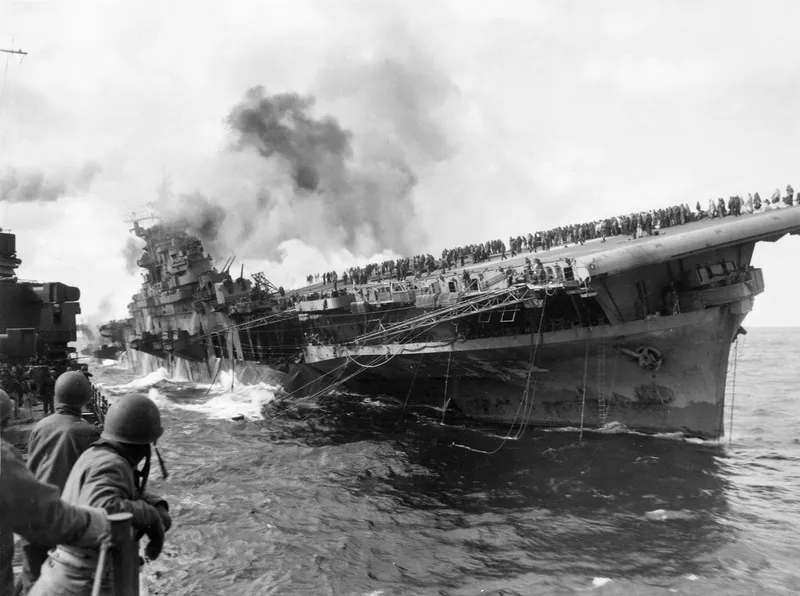
- What: An Allied project backed by Winston Churchill during World War II aimed to create large, highly damage-resistant aircraft carriers made from a material called pykrete.
- Where: Canada.
- When: around 1943.
During World War II, a bizarre plan, strongly backed by Winston Churchill, took shape. It involved constructing so-called 'unsinkable' aircraft carriers from a material called 'pykrete.' This blend of ice and wood pulp was reported to create a remarkably tough vessel.
Project Habbakuk, as it was named, aimed to revolutionize naval warfare. Imagine aircraft carriers that could float for long periods, resisting enemy attacks. The idea seemed ludicrous, yet scientists were intrigued.
By 1943, a team in Canada began experimenting with pykrete, revealing its surprising strength and durability. They built a small prototype, showcasing its potential. However, as the war progressed, practical challenges grew and priorities shifted.
Ultimately, Project Habbakuk faded into obscurity, but its vision sparked imagination. The possibility of these floating fortresses changing the course of history remains a fascinating 'what if' of wartime innovation.
Did You Know?
Pykrete was named after Geoffrey Pyke, who championed the idea of using ice for military applications.