
🌿 Stories carved by wind and water
How One East African Cichlid Rebuilds Its Jaw to Crack Snails
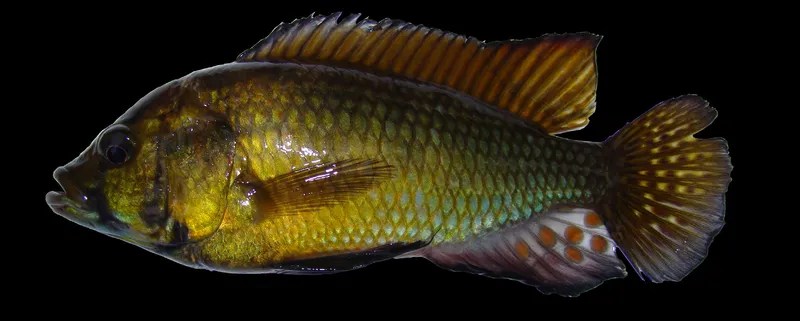
- What: The East African cichlid Astatoreochromis alluaudi can reshape its pharyngeal jaw in response to a snail-heavy diet, improving its ability to crush hard shells.
- Where: East Africa.
- When: Within months, during the fish’s lifetime.
Astatoreochromis alluaudi does not rely on a fixed feeding setup. This East African cichlid can change the structure of its pharyngeal jaw, a second set of jaws in the throat used to process food, when its diet shifts toward hard-shelled snails.
That matters because crushing snails is a different mechanical problem from handling softer prey. The fish needs more than a change in behavior. It needs a different arrangement of bone and muscle use, one better suited to repeated force.
Jaw Changes for Snail Crushing
Research has shown that this shift can happen within months. When these cichlids feed on snails, the pharyngeal jaw becomes better adapted for shell-crushing. The change is not a complete rewrite of the animal’s anatomy, but it is substantial enough to alter how the fish feeds.
The striking part is how quickly that adjustment can happen. In many animals, differences in feeding structures are discussed over evolutionary timescales, across populations or species. Here, the adjustment happens within the life of an individual fish, in response to what it is regularly eating.
Dietary Plasticity in A. alluaudi
A. alluaudi is often used as an example of dietary plasticity for that reason. It can move between a more general feeding mode and a specialized crushing mode, depending on the prey available. In waters where food types can vary, that flexibility may offer a practical advantage.
Why Feeding Flexibility Matters
The case also sharpens a broader point about adaptation. Not every useful biological change requires a long wait across generations. Some traits are flexible enough to respond on much shorter timescales, as the animal’s routine demands shift.
For this cichlid, snails are not just a food source. They are a mechanical challenge that can reshape the feeding apparatus used to break them. The result is a fish whose diet does not merely fill its body, but helps configure how part of that body works.
Did You Know?
Pharyngeal jaws are a modified set of jaws in the throat that many cichlids use to process food after it is caught.