
🌍 Records from the halls of power
Chernobyl's Giant Steel Arch Was Built to Slide Over Reactor 4
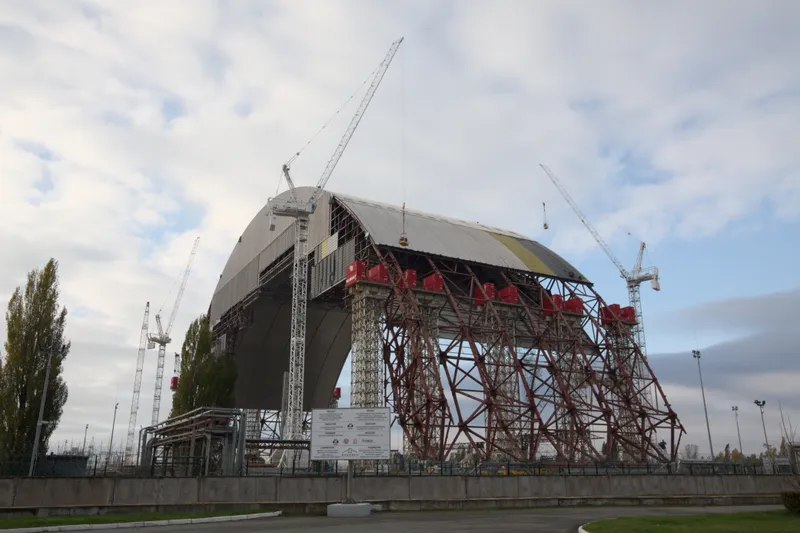
- What: The New Safe Confinement is a steel arch built to isolate Chernobyl’s damaged Reactor 4 and support long-term cleanup and decommissioning work.
- Where: Chernobyl Nuclear Power Plant, Ukraine.
- When: Completed in 2016, decades after the 1986 Chernobyl disaster.
The structure standing over Chernobyl’s damaged Reactor 4 is not a building in the usual sense. It is a steel confinement system engineered to do one job for decades: isolate the remains of the 1986 disaster from the outside environment while crews continue work at the site.
Known as the New Safe Confinement, the structure was built beside the reactor rather than directly above it. That mattered. Radiation levels near the wreckage made conventional construction over the reactor far more difficult and dangerous, so the arch was assembled at a safer distance in sections.
Built Beside Reactor 4
Once complete, the entire structure was moved into place on rails, a slow and highly controlled operation that gave the project its unusual character. The comparison to pulling a metal cover over the ruined reactor is close enough to be useful, though the reality was much more exacting: a 36,000-ton enclosure had to be positioned with precision over one of the most hazardous industrial sites on Earth.
The scale is part of what makes the confinement so striking. It is widely described as one of the largest movable land-based structures ever built, stretching about 162 meters in length and roughly 257 meters in width. Those dimensions were not a display of ambition for its own sake. The structure had to be large enough to cover the existing shelter and contain the unstable remains beneath it.
How the Arch Was Moved
Its purpose is practical rather than symbolic. The arch reduces the release of radioactive material, shields the site from weather, and creates conditions for safer dismantling and long-term decommissioning work. In other words, it does not erase the catastrophe. It buys time, control, and a more workable environment for dealing with what the explosion left behind.
Construction was completed in 2016, decades after the accident itself. That gap says something important about the nature of nuclear cleanup: the hardest part is often not the immediate emergency, but the long engineering effort that follows. At Chernobyl, the most memorable move may have been sliding a giant steel shell into place, but the real significance is simpler. The reactor remains dangerous, and this is the structure designed to keep that danger contained while the work continues.
Did You Know?
The New Safe Confinement was designed with a planned service life of about 100 years.