
🌍 Records from the halls of power
Grosse Île and the Hard History of Quarantine in the St. Lawrence
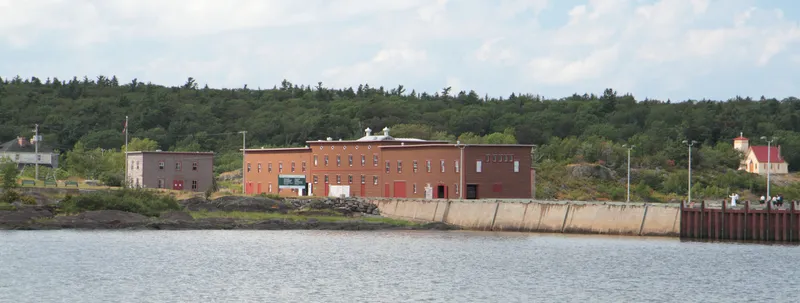
- What: Grosse Île was a quarantine station where immigrants arriving in Canada through Quebec were inspected for disease before continuing inland.
- Where: Grosse Île, in the St. Lawrence River near the Port of Quebec, Canada.
- When: 1832 to 1937.
Grosse Île was not simply an island stop on the way to Quebec. For more than a century, from 1832 to 1937, it was the quarantine station where immigrants arriving at the Port of Quebec were inspected before entering the country. In one place, public health policy, migration, and private loss came together.
Quarantine at the Port of Quebec
The logic of the station was straightforward: if disease could travel with ships, then the first line of defense had to be at the river’s edge. Immigrants underwent health checks, and belongings could be steam-disinfected in large autoclaves. The process was designed to limit the spread of illnesses such as cholera and typhus, but it also turned arrival into a waiting period shaped by uncertainty. Before families could continue inland, they had to pass through a system built around suspicion of contagion.
Personal Loss on the Island
That is part of what makes Grosse Île so historically sharp. It was an administrative checkpoint, but it was also a place where personal histories stalled. The surviving record is not only in official documents but in the unclaimed possessions left behind. A suitcase, a bundle, an ordinary object separated from its owner can say as much about migration as any statistic. These items suggest interrupted plans, delayed reunions, and, in some cases, journeys that ended on the island itself.
Why Grosse Île Still Matters
Today, Grosse Île is recognized as a national historic site of Canada, but its importance is more specific than commemoration alone. It offers a clear view of how governments managed risk during periods of large-scale immigration and how those measures were experienced by the people passing through them. The island was isolated by geography, yet closely tied to the movement of thousands of lives.
That is why Grosse Île still matters in family history research and in the broader history of the Atlantic world. It marks the point where a new life in Canada could begin, be delayed, or be permanently altered. The island remains one of the clearest physical traces of how migration and disease control met in the same narrow channel of entry.
Did You Know?
Grosse Île was designated a National Historic Site of Canada in 1974.