
🧪 Echoes from the lab
How Zebra Mussels Spread Through the Great Lakes
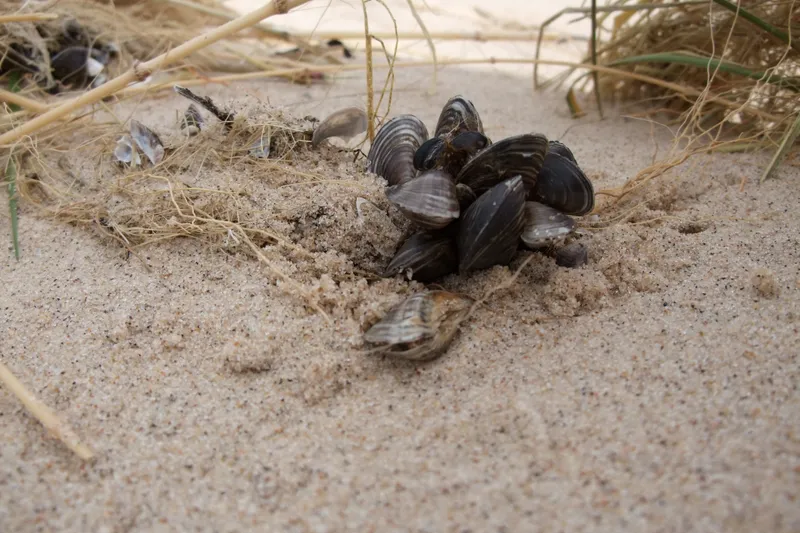
- What: Zebra mussels were accidentally introduced to the Great Lakes and rapidly became an invasive species that clogged infrastructure and disrupted freshwater ecosystems.
- Where: The Great Lakes region of North America.
- When: Late 1980s.
Zebra mussels reached the Great Lakes in the late 1980s, most likely carried in the ballast water of transoceanic ships. The species was small, hardy, and well suited to freshwater conditions. Once established, it spread quickly.
Ballast Water Introduction
That speed mattered because zebra mussels do not stay confined to one shoreline or harbor. They attach to hard surfaces in large numbers and reproduce fast enough to overwhelm systems built without any such invasion in mind. In the Great Lakes, that meant intake pipes for cities, water treatment facilities, and power plants began to clog within just a few years.
The result was not only an ecological problem but also an infrastructure one. Utilities and municipalities had to clear blocked pipes, modify equipment, and absorb repeated maintenance costs. For places that depended on uninterrupted water flow, even a small shellfish became an expensive operational problem.
Infrastructure and Ecological Damage
The ecological effects were broader and harder to contain. Zebra mussels are efficient filter feeders, and in large numbers they can sharply alter freshwater environments. Their presence changed conditions in ways that put pressure on native species already adapted to the lakes. An introduced organism that arrived accidentally became a durable part of the system.
The Great Lakes invasion is often described as a case of unintended consequences, but the mechanics were concrete: global shipping moved water, water moved a species, and the species found a region where it could thrive. Once that happened, removal was no longer realistic at the scale of the lakes.
Native Range and Spread
Zebra mussels are native to the Caspian and Black Sea region, and their spread in North America became one of the clearest examples of how trade routes can also function as biological pathways. In the Great Lakes, the cost was measured in disrupted infrastructure, ongoing control efforts, and lasting changes to the ecosystem.
Did You Know?
Zebra mussel larvae are microscopic and free-floating, which helps them spread easily through water systems.