
🌍 Records from the halls of power
Giethoorn and the Old Village Built Around Canals
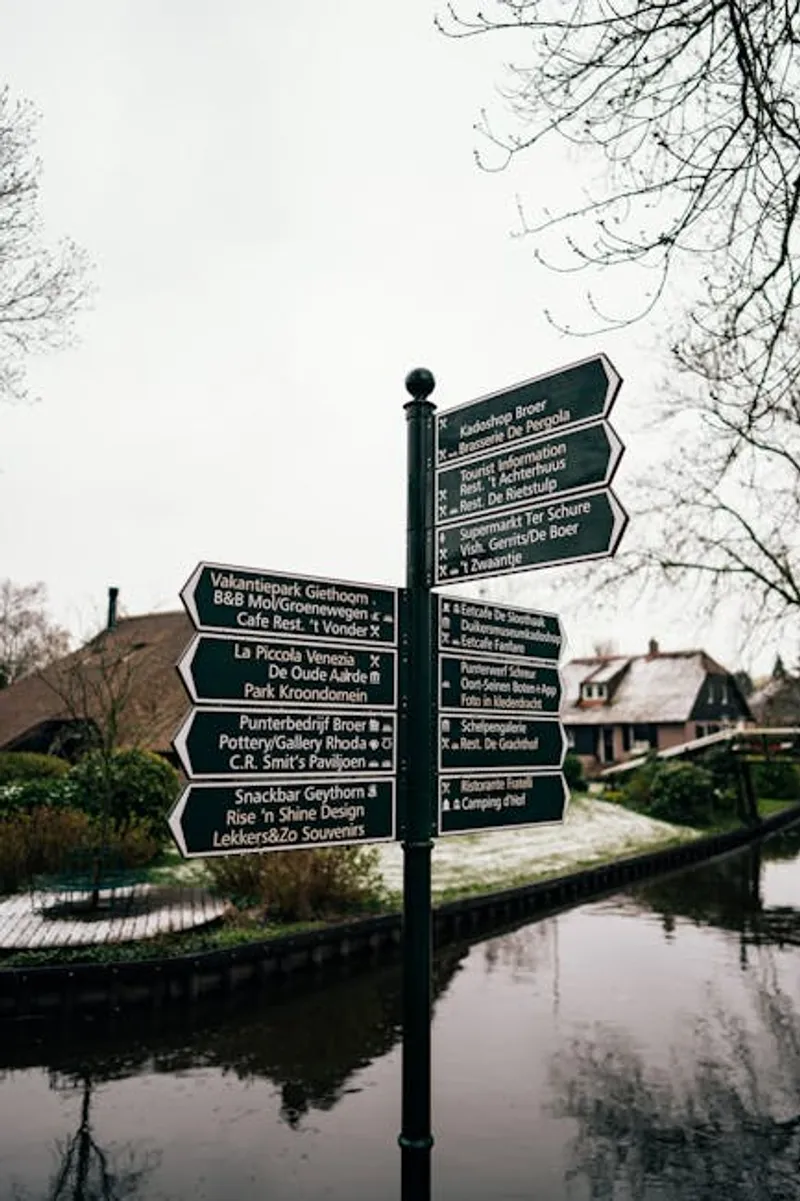
- What: Giethoorn’s historic center is known for a canal-based layout with footpaths and footbridges instead of a conventional street grid, shaping how people move through the village.
- Where: Giethoorn, in the Netherlands.
- When: Today, especially in the village’s older historic core.
Giethoorn is often introduced as the Dutch village without roads, but that shorthand needs a little more precision. The older part of the village is the unusual part: daily movement there has long depended on canals, footpaths, and small bridges rather than a conventional street grid.
That layout gives Giethoorn its distinct rhythm. In the historic center, many houses sit along narrow waterways, and some are reached more naturally by boat than by car. Instead of front streets lined with traffic, the village is known for canals edged by gardens, walking paths, and thatched-roof homes.
Canals and Footbridges
The result is not a fantasy version of rural life so much as a place shaped by its physical design. Boats are not just for sightseeing; they are part of how the old village works. The footbridges linking one side of the canal to the other are just as central to the layout, turning short walks into a sequence of crossings rather than intersections.
That is also why Giethoorn gets compared to Venice, though on a much smaller and quieter scale. The comparison is less about grandeur than function: water is not simply scenery. It helps organize movement, access, and the visual character of the place.
A Quiet Village Layout
Visitors tend to notice the calm first. With limited car traffic in the old center, the village feels different from most European towns. The usual cues of urban movement are reduced, and what stands out instead is the slow pattern of boats passing close to homes and gardens. The canals do not separate village life from the landscape; they are part of the village fabric itself.
Giethoorn’s reputation can sometimes flatten that reality into a travel slogan, as if the entire place exists outside modern infrastructure. It does not. But its historic core remains notable because it still works according to a layout that many places abandoned long ago. That is what makes Giethoorn more than just photogenic: it is a village where waterways and footbridges still shape ordinary movement in ways most road-based settlements no longer do.
Did You Know?
Giethoorn is in the province of Overijssel.