
🎭 Fragments from the heart of civilization
The 2014 Sappho Discovery: Two New Poems and Why Scholars Paid Attention
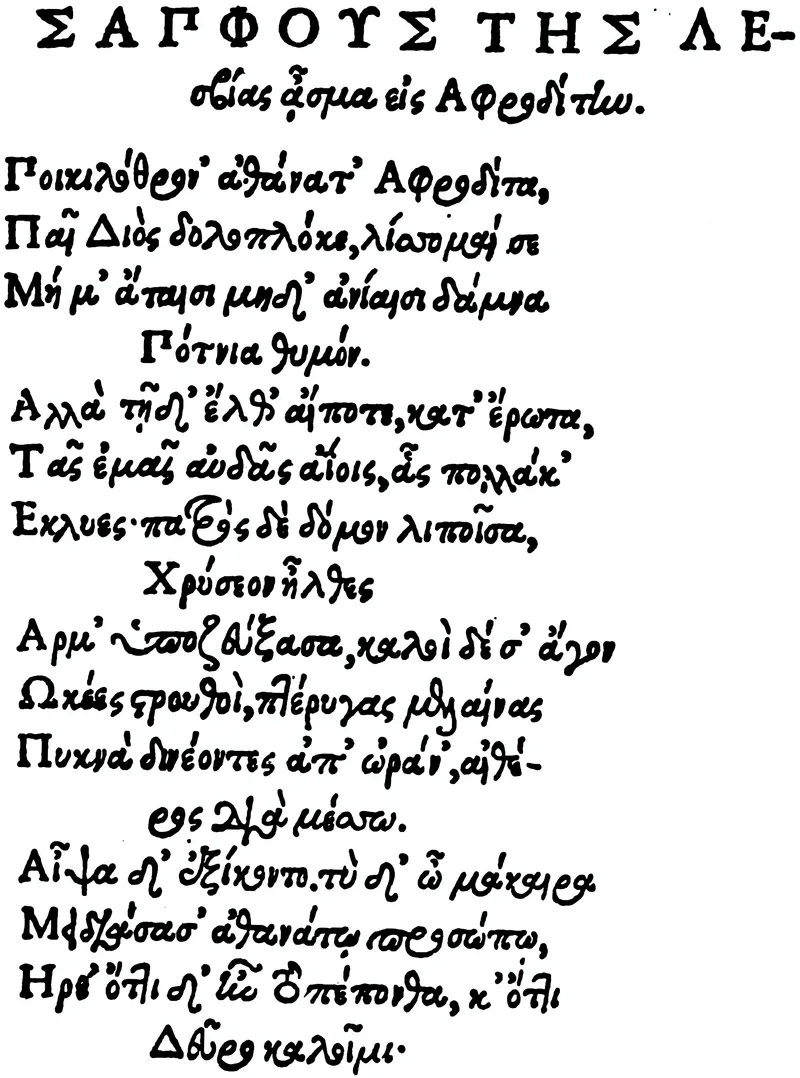
- What: The article describes the 2014 announcement of two previously unknown poems attributed to Sappho and explains why the discovery drew scholarly attention.
- Where: Lesbos; the poems were reported from material in a private collection.
- When: 2014, with Sappho active around 600 BCE.
In 2014, scholars announced the discovery of two previously unknown poems attributed to Sappho, one of the most studied and most fragmentary poets of the ancient world. That alone made it unusual. Very little of Sappho’s work survives, and genuinely new lines do not appear often.
The Two Poems Discovered
The poems were reported from material in a private collection. One quickly became known as the Brothers Poem, because it refers to Sappho’s brothers and brings family life into view more directly than many readers had seen in her surviving work. The other added further lines to the small body of verse through which Sappho has been known for centuries.
Why Scholars Paid Attention
Sappho, active around 600 BCE on Lesbos, has long occupied a rare place in literary history. She is central to the lyric tradition, but most of what remains of her poetry comes down in damaged fragments, quotations, and scraps preserved by chance. That is why any new text linked to her receives intense scrutiny. The excitement in 2014 was not just about gaining more Sappho. It was also about whether the attribution, wording, and provenance could stand up to scholarly examination.
The discovery mattered because it offered something concrete rather than symbolic: new evidence. The Brothers Poem, in particular, suggested a more specific domestic and social setting than readers often associate with Sappho’s surviving lines on desire, prayer, and emotional intensity. It did not overturn her reputation, but it did complicate it in a useful way, showing again how partial the surviving picture has always been.
Why the Discovery Still Matters
There was also a caution built into the story from the start. Ancient texts that surface from private hands can raise difficult questions about origin and transmission, and scholars tend to be careful for good reason. Even so, the appearance of new Sappho in 2014 was treated as a serious literary event because the baseline fact remained remarkable: after more than two millennia of loss, there were still lines emerging that appeared to expand the record of one of antiquity’s most famous voices.
For readers, the lasting significance is simple. With Sappho, almost every surviving word carries unusual weight. When two more poems enter the conversation, they do not just add material. They test how securely we think we know a writer whose legacy has always been built on fragments.
Did You Know?
Sappho is one of the few ancient Greek poets whose work is still studied largely through fragments preserved by later writers and damaged papyrus finds.