
🌿 Stories carved by wind and water
How Some Bleached Corals Grow Back From What's Left
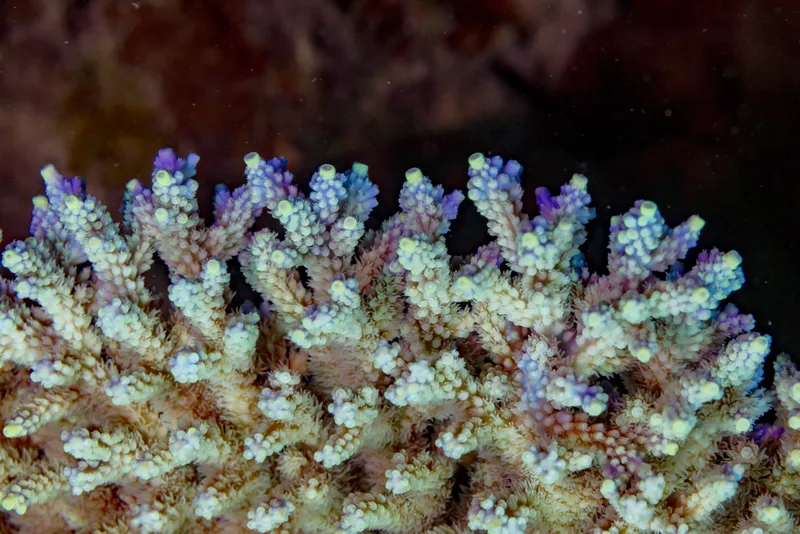
- What: Researchers found that some Acropora corals on the Keppel Islands regrew after severe bleaching by expanding surviving living tissue near their bases, rather than dying outright.
- Where: Keppel Islands, Great Barrier Reef, Australia
- When: After the severe 2006 bleaching event
Mass bleaching is usually treated as a one-way decline for coral reefs. But on the Keppel Islands in the Great Barrier Reef, researchers documented a more complicated outcome after the severe 2006 event: some damaged coral colonies did not simply die off. They regrew.
Regrowth After Mass Bleaching
The corals in question were Acropora, a group often associated with fast growth but also with vulnerability during heat stress. After bleaching, scientists observed that colonies could recover from small living remnants near their bases. Instead of starting over as entirely new colonies, surviving tissue expanded outward and rebuilt coral cover surprisingly quickly.
The Phoenix Effect
That pattern has been described as the phoenix effect. The phrase can make the recovery sound dramatic or exceptional, but the underlying point is more specific. The reef was not untouched, and the comeback was not guaranteed. Recovery depended on parts of the colony remaining alive after the bleaching event. Where those remnants persisted, regrowth could be rapid enough to restore cover within about a year.
Why Coral Damage Assessment Matters
That matters because coral recovery is often misunderstood in two opposite ways. One view assumes reefs always bounce back if given time. The other assumes severe bleaching leaves no realistic path to recovery at all. The Keppel Islands observations sit between those extremes. Some coral systems can rebound sharply, but only under certain conditions, and only if enough living structure remains in place to regrow.
The broader implication is practical rather than sentimental. When scientists assess reef damage, the key question is not only how much coral looks lost at first glance, but how much living tissue is still there to recover. In a period of repeated climate stress, that difference can shape whether a reef section merely survives on paper or actually rebuilds itself.
Did You Know?
Acropora are commonly known as staghorn or table corals, and they are among the fastest-growing reef-building corals.