
🌿 Stories carved by wind and water
Libyan Desert Glass Still Has an Origin Problem
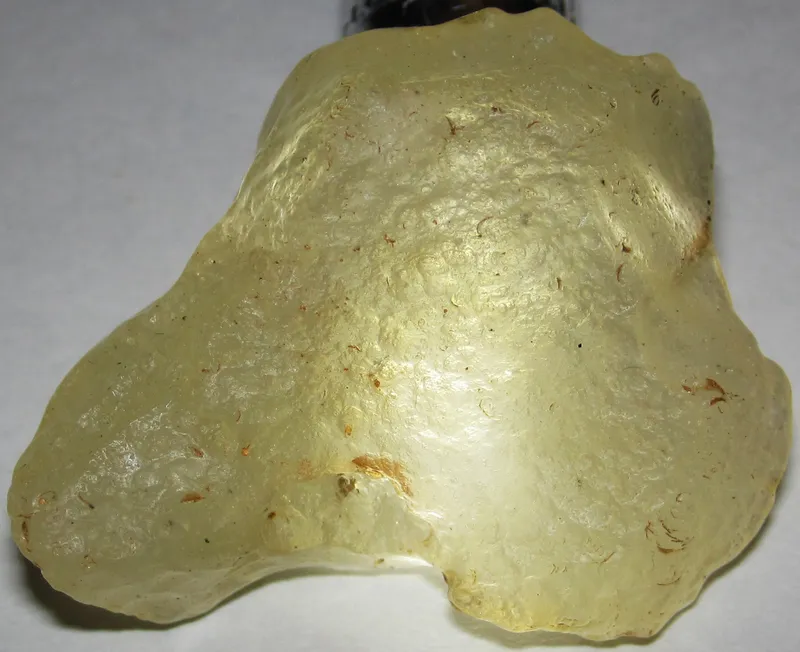
- What: Libyan Desert Glass is a natural glass formed about 29 million years ago by extreme heat, but scientists still debate whether that heat came from an impact or an airburst.
- Where: The Great Sand Sea near the Egypt-Libya border.
- When: About 29 million years ago.
Libyan Desert Glass is hard to miss. Scattered across the Great Sand Sea near the Egypt-Libya border, the material appears as pale yellow, translucent chunks lying on an otherwise barren desert floor. It looks worked by hand, but it is natural glass, formed roughly 29 million years ago under extreme heat.
What Libyan Desert Glass Is
That much is widely accepted. The harder question is what produced that heat. Researchers have long linked the glass to a cosmic event, but the exact mechanism remains unsettled. One possibility is an extraterrestrial impact. Another is a low-altitude airburst that heated the surface without leaving the kind of crater people expect from a direct strike.
That uncertainty is part of what makes the glass more interesting than it first appears. It is easy to assume a material this unusual must have a single dramatic explanation already pinned down. In fact, Libyan Desert Glass sits in a narrower and more awkward category: evidence of an extreme event, but not a fully agreed one. The sand clearly melted. The debate is over how.
The Heat Behind the Glass
The result is a field of natural glass spread across the desert, rare enough to attract both scientific attention and collectors. Its color and clarity have also made it desirable beyond geology. Archaeologists and gem hunters have sought it out for years, drawn not just by its appearance but by the puzzle attached to it.
The popular version of the story often leans too quickly toward certainty, as if the glass already proves one clean scenario. It does not. A catastrophic impact is plausible. So is a powerful atmospheric event. The key point is not that anything could have happened, but that the material records intense heating while leaving room for argument about the exact cause.
Why the Origin Still Matters
That unresolved gap is the real curiosity here. Libyan Desert Glass is not mysterious because its existence is doubtful; it is mysterious because it is plainly real and still resists a neat origin story. After millions of years in the desert, the glass remains easier to pick up than to explain.
Did You Know?
It is also known for containing unusually high levels of silica, which gives it its glass-like appearance.