
🚀 Whispers from the silent cosmos
Aging in Space: Time Dilation Explained on the ISS
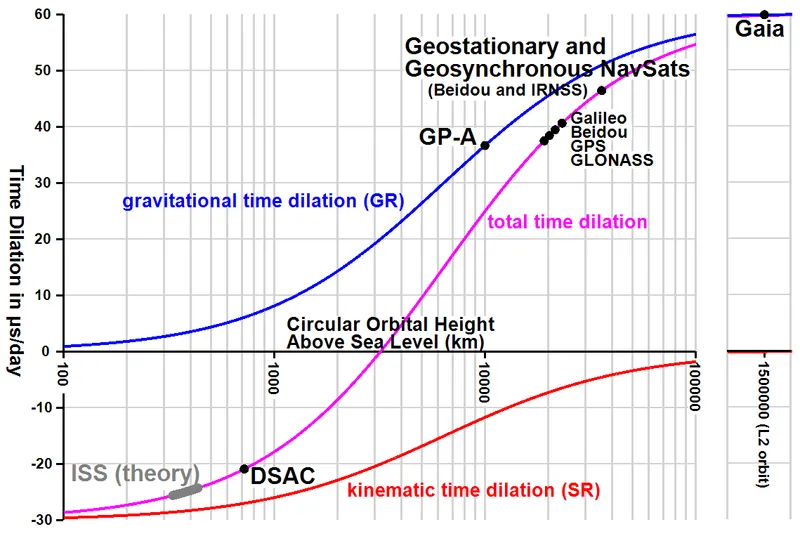
- What: Astronauts aboard the International Space Station age slightly slower than people on Earth due to time dilation effects.
- Where: International Space Station (ISS)
- When: Current research period
Imagine floating in space, surrounded by stars, while your friends back on Earth are aging just a bit faster. This isn’t science fiction; it’s reality aboard the International Space Station (ISS).
Due to the effects of time dilation, astronauts experience time differently than people on Earth. The incredible speed at which the ISS travels—about 17,500 miles per hour—creates a fascinating phenomenon.
According to Einstein’s theory of relativity, time moves slower for objects in motion compared to those at rest. This means that astronauts age slightly slower than their Earth-bound counterparts. While the difference is minimal—measured in microseconds per day—it’s a measurable effect using atomic clocks.
However, there’s a catch. The weaker gravity experienced in low Earth orbit has an opposite effect, slightly speeding up time. Yet, the impact of high orbital speed on time dilation outweighs this, resulting in a net gain of youth for astronauts.
As of now, scientists are still studying these effects to understand how long-term space travel might influence human biology. With future missions planned to Mars and beyond, the implications of time dilation could become even more crucial.
So next time you think about space travel, remember: you might just return a little younger than when you left.
Did You Know?
In 1971, the Soviet Union launched Soyuz 10, the first attempt to dock with a space station, although it did not succeed.