
🌿 Stories carved by wind and water
Why Some Stickleback Fish Lost Their Armor
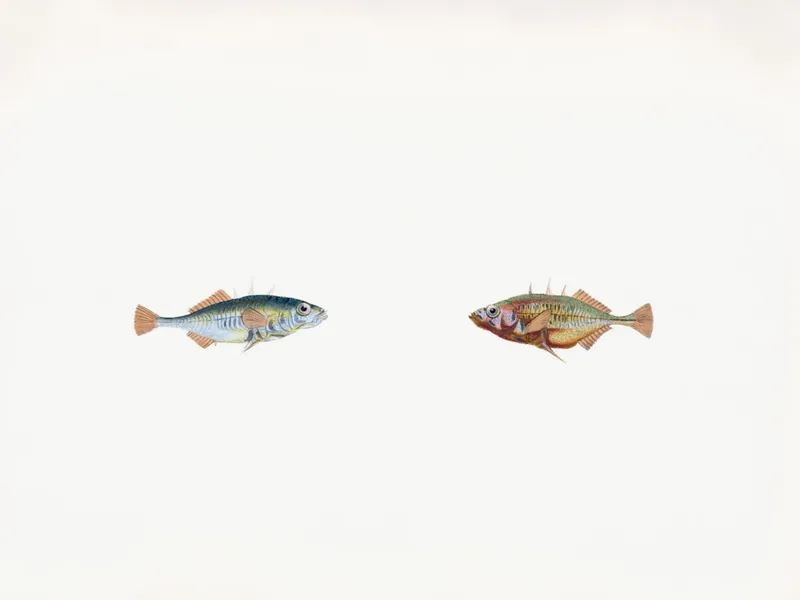
- What: Some Alaskan stickleback fish evolved to lose much of their bony armor after becoming isolated in freshwater, likely because changing predation pressure made heavy plating less advantageous.
- Where: Freshwater lakes in Alaska.
- When: Within a few decades after isolation.
Armor sounds like an obvious advantage. In stickleback fish, it is famous for a reason: marine populations typically carry rows of bony plates that help protect them from predators. But in parts of Alaska, some isolated freshwater sticklebacks took a different path. Within a few decades, they evolved with much less armor.
Why Sticklebacks Lost Armor
That change drew attention because it seems backward at first glance. If bony plates help fish survive, why would natural selection favor losing them? The answer is not that the fish somehow stopped needing protection altogether. It is that protection depends on the setting.
Freshwater Predation Pressure
After sticklebacks became isolated in freshwater lakes, the balance of risks appears to have changed. Researchers have widely linked the reduction in plates to shifts in predation pressure in those new environments. A defensive trait that is useful in one habitat may be less useful, or carry different tradeoffs, in another. In that context, heavy armor is not automatically the best option.
That is the part people often miss when they picture evolution as a steady march toward more elaborate defenses. Evolution does not work toward a fixed ideal, and it does not preserve a trait just because it is familiar or impressive. If conditions change, a population can change with them, sometimes by becoming less armored rather than more.
What the Alaskan Fish Reveal
The Alaskan sticklebacks are a clear example of that logic. The shift happened quickly enough to be striking, on the scale of decades rather than vast stretches of deep time. For biologists, that makes these fish especially useful for studying adaptation as it unfolds in real populations, not just as a pattern reconstructed long after the fact.
The broader implication is concrete. A lost trait is not always a sign of weakness or decline. In the right environment, losing a classic defense can be part of how a species persists.
Did You Know?
Stickleback armor is a classic example of rapid adaptation because the fish can change noticeably over very short evolutionary timescales.