🏺 Recovered from the dusty archives
6 Medieval Relics That Kept Multiplying
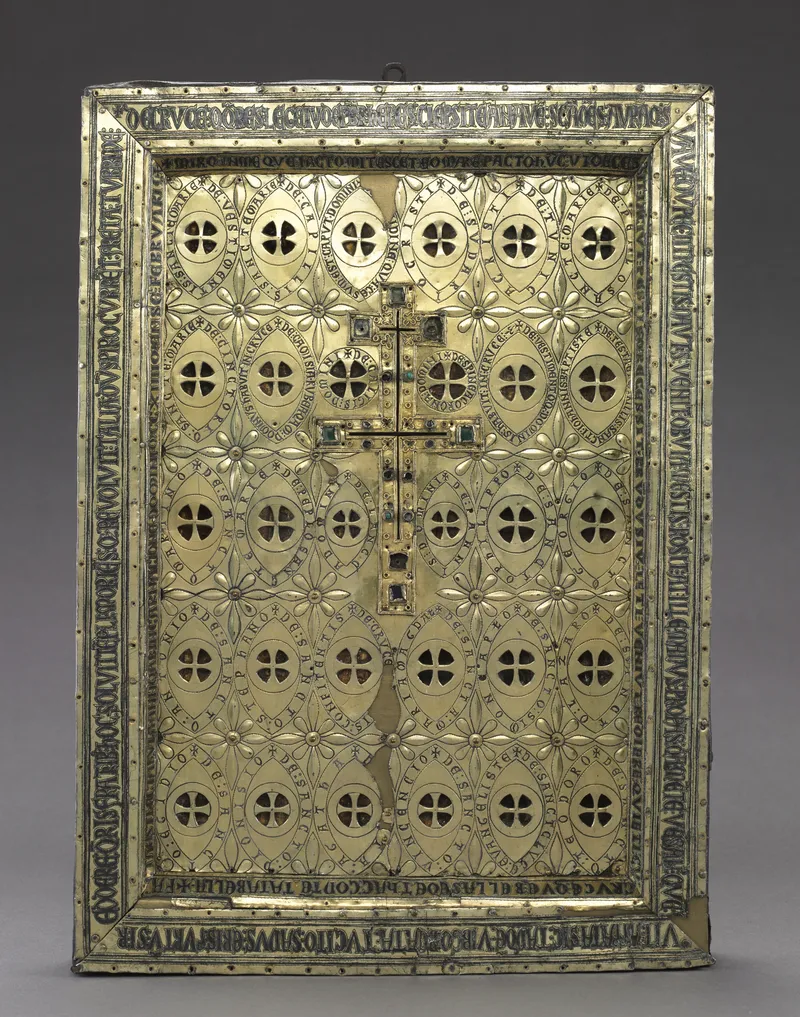
- What: The article explains how medieval Christian relic culture allowed sacred objects and claims to multiply through division, contact, circulation, and competing traditions rather than through modern standards of exclusivity.
- Where: Medieval Europe.
- When: The Middle Ages, especially the High Middle Ages and the later medieval period.
Medieval Europe did not treat relics like simple museum objects. They represented power, prestige, pilgrimage, and proof of sacred connection all at once.
That helps explain one of the strangest patterns in church inventories: the same holy object could appear again and again in different places, with each claim carried by gifts, trade, touch, division, or devotion.
1. Fragments Marketed as the True Cross
From the High Middle Ages onward, slivers allegedly cut from the True Cross appeared across Europe. Church inventories recorded them as treasured possessions, and these fragments could move through gifts, exchanges, or outright purchase.
The shock is not that one fragment existed, but that so many did. No definitive proof tied these splinters to the Crucifixion, yet the claim was powerful enough that tiny pieces could anchor a church’s prestige and attract devotion.
2. Multiple 'Heads' of John the Baptist
Several churches, including Amiens and Rome, displayed skulls claimed to be the head of John the Baptist. These claims were mutually exclusive, but they still circulated and persisted.
That mattered because a major relic could transform a church into a destination. Miracles, pilgrimage, and local status all gathered around the object, even when another church elsewhere presented a rival head with the same certainty.
3. St. Nicholas’s Bones — Split Between Cities
In 1087, sailors from Bari translated most of St. Nicholas’s remains from Myra. Later, Venice also claimed additional relics, and both cities built major cults around the portions they held.
This is multiplication by division. Instead of one shrine controlling one saint’s body, separate repositories could each present themselves as authentic guardians of the same holy remains, creating rival sacred geographies around shared fragments.
4. Contact Relics: Objects Made Holy by Touch
Not every relic had to be a body part. Cloth, ampullae, and other objects could become secondary relics after touching a saint’s tomb or a primary relic.
That mechanism changed everything. It meant holiness could be transferred, at least in devotional practice, and then distributed through pilgrimage networks. One saint’s shrine could generate many more sacred objects without dividing the original remains.
5. 'Multiple' Pieces Claimed to Be the True Nail
Many churches displayed nails alleged to be from the Crucifixion, often linking their provenance to traditions about Helena’s discovery. Inventories could record these nails with detailed chains of custody and reverence.
The surprise is the repetition. Like fragments of the True Cross, the True Nails appeared in numerous places at once. No definitive proof settled the claims, but the relic type was so charged with meaning that multiple repositories preserved their own version.
6. Pilgrim Souvenirs Treated as Mini-Relics
Pilgrims brought home ampullae of holy oil or water and, in some cases, tiny splinters or other shrine-linked objects. These souvenirs could end up in parish treasuries and be recorded locally as secondary relics.
This is where the relic economy became fully networked. A major shrine did not just hold holiness in one place; it exported it in portable form, letting local churches participate in the aura of famous sacred sites through miniature, multiplied claims.
The medieval relic world was not organized around modern ideas of exclusivity. It worked through fragmentation, translation, contact, and circulation, which is exactly why Europe’s church inventories could fill up with holy objects that seemed to exist in more than one place at the same time.
Did You Know?
The Fourth Crusade’s sack of Constantinople in 1204 sent many relics from the Byzantine capital into Western European churches, dramatically increasing the number of major relic claims in the Latin West.