
🧩 Fragments from the unknown
When the Thames Smelled So Bad, Parliament Finally Acted
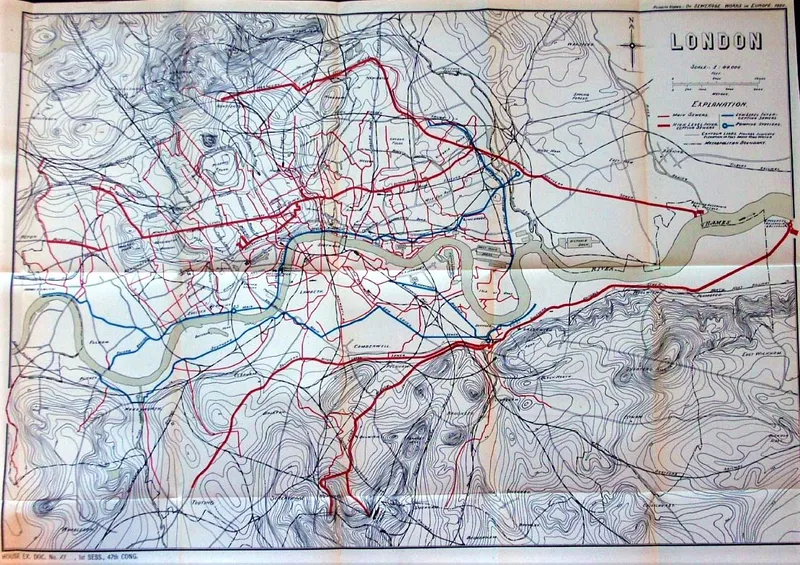
- What: The Great Stink of 1858 forced Parliament to act on London’s sewage crisis, leading to Joseph Bazalgette’s modern sewer system.
- Where: London, especially along the Thames and at the Palace of Westminster.
- When: Summer 1858, during the Great Stink and the subsequent sewer-building years.
In the summer of 1858, the air over London became hard to bear. The Thames, long used as a dumping ground for human waste and runoff, gave off a stench so heavy that it settled over the city and seeped into its centers of power.
London had lived with filthy water for years. The river functioned as an open sewer, and the consequences were not abstract. Disease had already exposed the city’s sanitation crisis, even if many officials still misunderstood exactly how illnesses such as cholera spread. What the heat of 1858 changed was not the science overnight, but the political tolerance for delay.
When the smell reached the Palace of Westminster, the problem could no longer be kept at a distance. Members of Parliament, forced to work beside the reeking river, suddenly faced in their own chambers what much of the city had been enduring. The episode became known as the Great Stink.
The name can make it sound like a grotesque curiosity. In practice, it was a turning point. Years of hesitation gave way to urgency, and attention focused on a large engineering solution rather than another temporary fix.
That answer came from civil engineer Joseph Bazalgette. His plan called for a major new sewer system designed to intercept waste before it poured directly into the Thames through central London. It was expensive, disruptive, and ambitious on a scale the city had resisted before. In the atmosphere created by the Great Stink, it became possible.
Funding was approved and construction moved ahead. Over the following years, London built the underground infrastructure that would reshape how the city handled sewage. The river was not redeemed in an instant, and the work was part of a longer public health story rather than a single dramatic cure. But 1858 marked the moment when the cost of doing nothing became impossible for Parliament to ignore.
The legacy of the Great Stink is still concrete. Beneath London, Bazalgette’s sewers helped define the modern city by turning sanitation into infrastructure rather than an afterthought. A foul summer on the Thames did not solve London’s problems by itself, but it forced the state to build for a reality it had postponed too long.
Did You Know?
Bazalgette’s sewer system is still part of London’s infrastructure today.