
🕯️ Notes from the casefile
Why Cartels Rely on Narco-Submarines
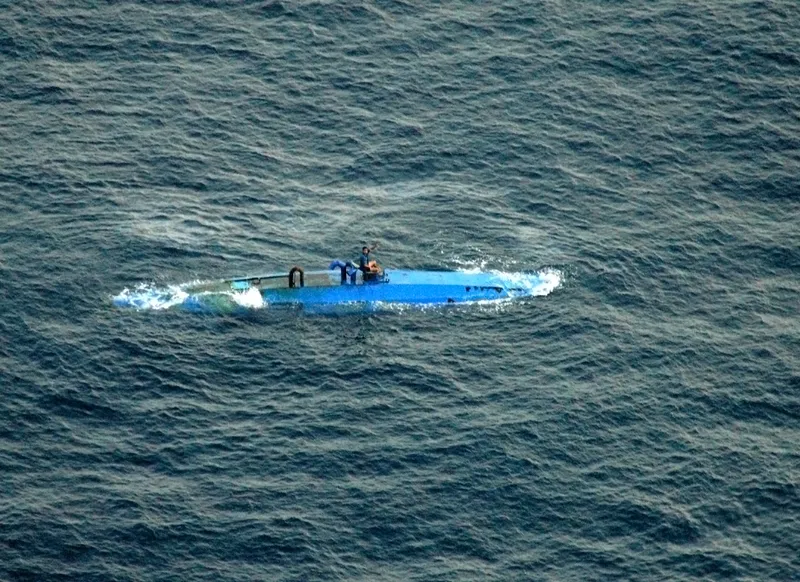
- What: Narco-submarines are low-profile semi-submersible vessels used by trafficking groups to move large drug shipments while reducing the chance of detection at sea.
- Where: Primarily across long ocean routes, especially in parts of South America and the Pacific.
- When: In recent years.
Narco-submarines are less a cinematic oddity than a practical answer to a basic smuggling problem: how to move large drug shipments across long stretches of ocean without drawing attention. In parts of South America, trafficking groups have used semi-submersible vessels to do exactly that, taking advantage of the distance at sea and the difficulty of constant maritime surveillance.
Most of these craft are not true submarines in the military sense. They are typically built to ride very low in the water, with only a small portion visible above the surface. That low profile matters. It reduces the chance of detection by patrols and makes the vessel harder to spot in open water, especially compared with conventional boats.
The appeal is straightforward. A semi-submersible can carry a substantial load while avoiding many of the risks that come with road routes, air drops, or more conventional maritime transport. Remote construction sites, often described as jungle shipyards, add another layer of protection before the vessel ever reaches the water. By the time authorities know one exists, it may already be moving cargo far from shore.
Technology helps, but the bigger advantage is geographic. GPS and other navigation tools can assist crews on long routes, yet the real cover comes from the scale of the Pacific and the limited ability of law enforcement to monitor every corridor all the time. Traffickers are exploiting a gap, not creating an invisible machine.
Authorities have intercepted a notable number of these vessels in recent years, including unusually large examples, which suggests the method remains active enough to justify the cost and effort. Those seizures also make clear that the system is not foolproof. Narco-submarines are risky, expensive, and vulnerable once detected. But from the traffickers’ perspective, one successful voyage can outweigh multiple losses.
That is what makes the phenomenon worth attention. Narco-submarines are not just evidence of cartel ambition; they reflect how criminal networks adapt to geography, enforcement pressure, and the weak visibility of the open sea. The challenge for governments is not only to find individual vessels, but to close the conditions that make them useful in the first place.
Did You Know?
The U.S. Coast Guard has publicly described some seizures as involving semi-submersibles carrying several tons of cocaine.