
🧪 Echoes from the lab
How Lasers Measured Earth Twisting Spacetime
- What: Scientists used laser-ranging measurements of the LAGEOS satellites to detect a signal consistent with Earth’s frame-dragging effect, a tiny general-relativistic twist in spacetime caused by Earth’s rotation.
- Where: In Earth orbit.
- When: Measured over decades, with key published results in the early 2000s.
Earth does not just sit in spacetime. Because it rotates, general relativity says it should drag spacetime slightly around with it. The effect is called frame-dragging, and around a planet as small as Earth, it is extremely hard to detect.
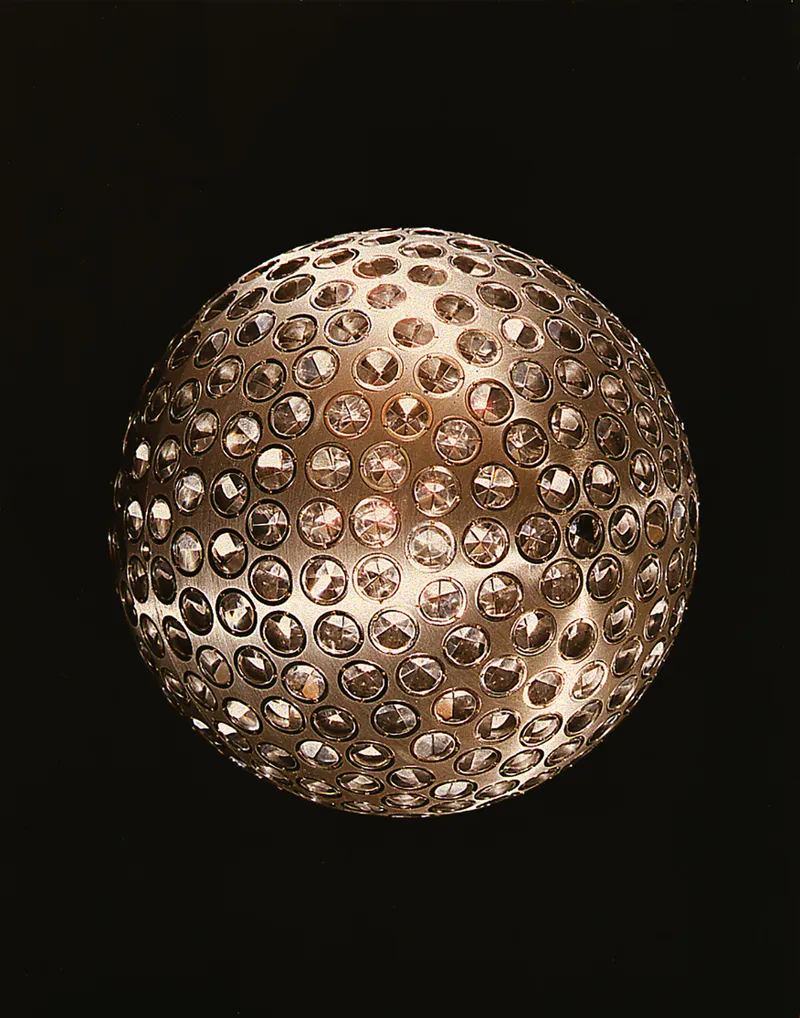
That is where two dense satellites came in. LAGEOS and LAGEOS 2, launched in 1976 and 1992, were built to be simple tracking targets: passive metal spheres covered with retroreflectors. From stations on Earth, scientists fired laser pulses at them and timed the return. This let researchers measure the satellites’ positions with remarkable precision over many years.
The basic idea sounds simple. If Earth’s rotation drags spacetime, the orbits of those satellites should shift by a tiny amount. But in practice, the relativistic signal is buried under much larger effects. Earth is not a perfect sphere. Its mass is unevenly distributed. Gravity from the Sun and Moon matters too. So the work was not just “point a laser and see relativity.” It took decades of laser-ranging data, better models of Earth’s gravity field, and careful comparison between prediction and observation.
One of the key reported results came in the early 2000s, when scientists including Ignazio Ciufolini and Erricos Pavlis used the LAGEOS satellites, along with improved gravity data from the GRACE mission, to estimate Earth’s frame-dragging effect. Their measured value was broadly consistent with general relativity within the stated uncertainties. Later studies, including work with the LARES satellite, aimed to refine the measurement further, though details of precision and error estimates have been debated in the scientific literature.
The rare part is the scale. Frame-dragging near Earth is not a dramatic cosmic event. It is a minute orbital twist, only detectable because the satellites were tracked with extraordinary consistency over long stretches of time. This is relativity tested not near a black hole, but in Earth orbit, using hardware that mostly just reflects light back where it came from.
The hard fact is that Earth’s rotation is expected to shift the orbital nodes of the LAGEOS satellites by roughly a few dozen milliarcseconds per year, and laser-ranging measurements reported a signal in that range, consistent with the frame-dragging predicted by general relativity.
Did You Know?
LAGEOS stands for Laser Geodynamics Satellite.