
🏺 Recovered from the dusty archives
The Fake Matisse That Hung for Years
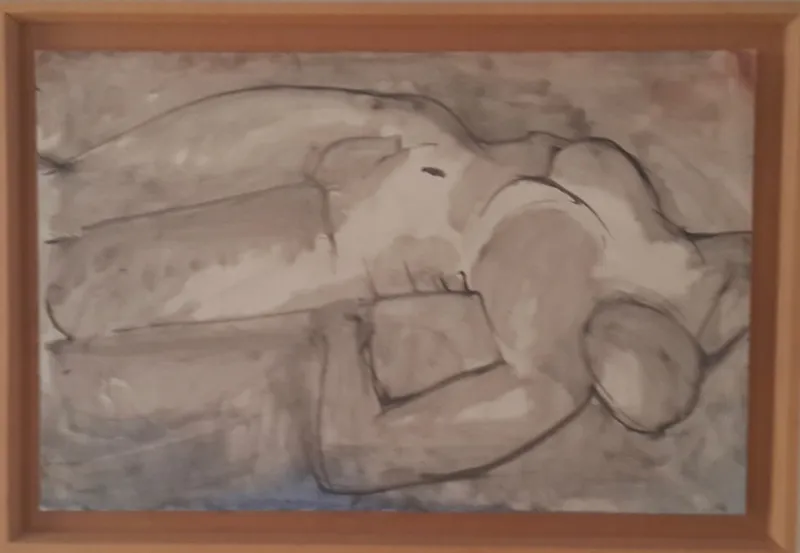
- What: Henri Matisse’s Odalisque in Red Trousers was stolen from a Caracas museum, replaced with a copy for years, and the original was recovered later in a 2012 FBI sting.
- Where: Museum of Contemporary Art in Caracas, Venezuela; later recovered in Miami.
- When: The switch happened sometime between 1999 and 2002, was discovered in 2002, and the original was recovered in 2012.
For years, visitors to the Museum of Contemporary Art in Caracas were looking at the wrong painting.
Somewhere between 1999 and 2002, Henri Matisse’s Odalisque in Red Trousers was stolen from the Venezuelan museum and replaced with a copy. The switch was not immediately caught. The fake remained on the wall until 2002, when the problem was finally spotted and the museum realized the original was gone.
That is what makes the case so striking. This was not a smash-and-grab disappearance that left an empty frame behind. The painting was still there, at least at a glance. The museum had an image in its collection, in its expected place, and for a period of time, that appearance was enough to hide the loss.
Details about exactly when the theft happened have remained unclear. Reports place the substitution sometime in the period from 1999 to 2002, but there is no definitive public account of the moment the original was removed. What is clear is the timeline after the discovery: the fraud was identified in 2002, and the search for the real painting stretched on for a decade.
The story resurfaced dramatically in 2012, when the FBI recovered the original Matisse in a sting operation in Miami. By then, the painting had traveled far from the museum wall where it had once hung unnoticed as a fake took its place. The recovery closed one chapter of the case, but it also underlined how vulnerable even major institutions can be when a replacement looks convincing enough to pass routine viewing.
The consequence is bigger than one missing artwork. Museums do not just protect objects; they protect trust. A substituted painting can fool not only visitors, but the systems built to document and preserve cultural heritage. In Caracas, the loss was not visible in the usual way. That is why the case still stands out: one of the most unsettling art thefts is the kind that leaves something behind.
The concrete implication is simple. For years, a museum of contemporary art displayed a Matisse that was not a Matisse at all, and the real work was not recovered until 2012. The frame was filled, the wall looked complete, and that was exactly what made the theft harder to see.