🏺 Recovered from the dusty archives
6 Secret Papers That Defied Censorship
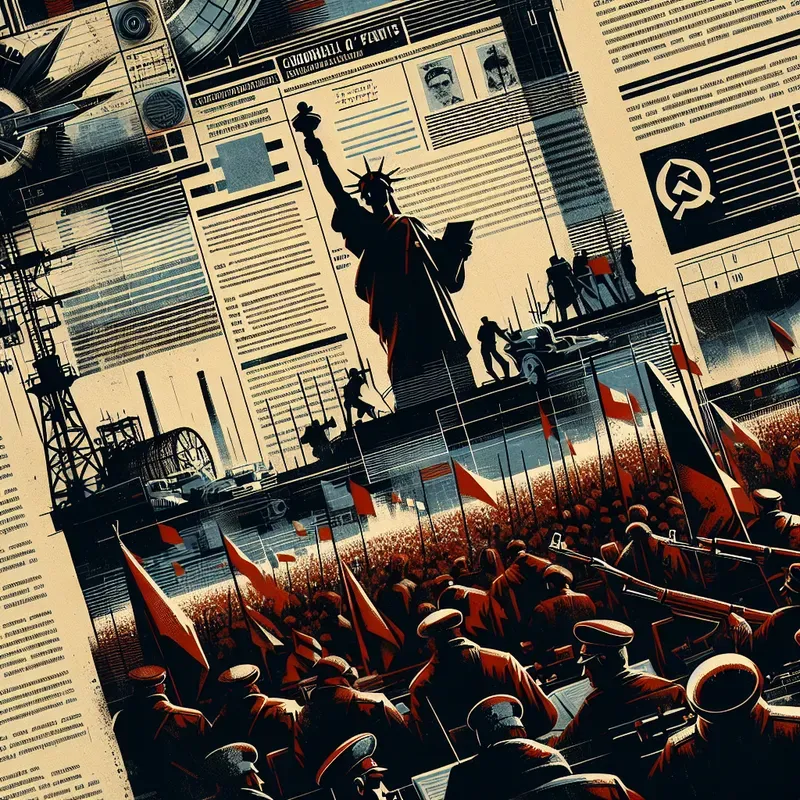
- What: This article highlights underground newspapers and samizdat networks that circulated censored information, sustained morale, and supported resistance under occupation and authoritarian rule.
- Where: Across occupied and authoritarian-controlled parts of Europe.
- When: Mainly during the World Wars and the Soviet-era Cold War period.
Some presses printed with machines. Others relied on hand-typed sheets, carbon copies, and couriers who could be stopped at any corner.
Under occupation and authoritarian rule, these underground publications did more than spread news. They kept people connected, skeptical, and harder to silence.
1. Biuletyn Informacyjny — Poland’s WWII underground bulletin
In occupied Poland during World War II, Biuletyn Informacyjny became one of the underground press titles people actively sought out. It was printed covertly, even as arrests and raids made every stage of production dangerous.
What made it remarkable was its scale and function at once. This was not just a whisper network on paper. It circulated resistance news to many thousands, helping coordinate understanding across a country under brutal occupation.
2. Combat — a clandestine French Resistance paper
In France, Combat used hidden printing presses across France to put out a clandestine paper under occupation. That alone was risky enough, but its role went beyond simply existing in secret.
Its pages carried political analysis and rallying slogans that helped bind different resistance circles together. In a fragmented underground, a newspaper could become infrastructure, giving scattered groups a shared language and a common pulse.
3. Het Parool — Dutch press that survived raids
In the Nazi-occupied Netherlands, Het Parool began small, as single-sheet notes, before growing into a full clandestine newspaper. That growth is the part that resonates most: something improvised became something durable.
It mattered because it offered detailed local reporting when official information could not be trusted. Even after raids, the paper survived, and that persistence itself became part of the message that public morale had not been erased.
4. La Libre Belgique — WWI clandestine Belgian voice
During World War I, La Libre Belgique was printed under occupation in Belgium and smuggled widely. It stood out not just because it existed, but because of how it sounded.
Its satirical tone gave it unusual force. Instead of only informing readers, it mocked the conditions imposed on them, and that made it an enduring symbol of Belgian resistance culture as well as a clandestine publication.
5. Chronicle of Current Events — samizdat that chronicled Soviet abuses
Inside the USSR, Chronicle of Current Events became a key node in the samizdat network. Rather than functioning as a conventional newspaper, it circulated clandestine compilations documenting trials, repression, and dissent.
That method was powerful precisely because it was so direct. In an environment shaped by censorship, a steady record of abuses could connect isolated cases into a visible pattern, turning private fear into shared evidence.
6. The Polish 'bibuła' networks — neighborhood printing cells
The Polish bibuła networks were not a single title but small neighborhood printing cells operating under censorship. With hand presses, underground books, leaflets, and risky courier routes, they built a distributed information system from the ground up.
The surprise is in the structure. Instead of one central press, these teams operated in smaller units, keeping communities informed through local effort and constant risk. It was resistance made of paper, logistics, and trust.
Across wartime occupations and authoritarian systems, these underground presses proved that controlling streets is not the same as controlling what people know, remember, or pass hand to hand.
Did You Know?
Het Parool survived the war and still exists today as a Dutch newspaper.