
🏺 Recovered from the dusty archives
Why an Anglo-Saxon Sword Was Owed
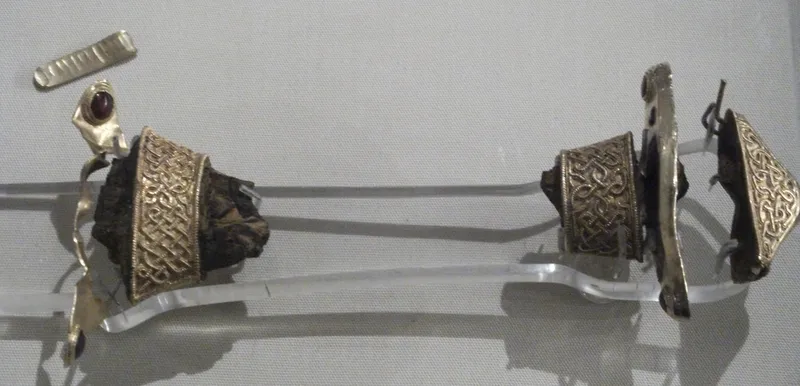
- What: Late Anglo-Saxon law treated elite war gear, including swords, as part of a heriot death duty owed to a lord.
- Where: Anglo-Saxon England
- When: Late Anglo-Saxon period, especially the early 11th century
In Anglo-Saxon England, a warrior’s sword could stop being his property the moment he died.
This was part of the heriot, a death duty owed by a man to his lord. For high-ranking men such as thegns, that payment was often made in war gear: swords, spears, shields, helmets, and horses. The point was not just ceremony. It was a formal legal obligation tied to status, land, and service.
The clearest evidence appears in late Anglo-Saxon law codes, especially under kings such as Cnut in the early 11th century. These texts set out what different ranks owed at death. A king’s thegn might owe multiple horses, weapons, and armor. A lesser noble owed less. The exact package varied by rank, but the pattern is clear: military equipment was treated as something that could revert to the lord when the holder died.
That changes how a sword looks in this society. It was personal, certainly. A sword could carry value, prestige, and practical use. But it was also entangled in a chain of obligation. A thegn did not simply own war gear in the modern sense. At least part of it was bound up with the service relationship that linked him to a more powerful lord.
One useful way to understand heriot is to compare it with returning issued equipment, except in a much more hierarchical world. Anglo-Saxon lords granted land and status in exchange for loyalty and military support. When the man died, some of the expensive tools of that service were due back. In a period when quality weapons and horses were major assets, this was a serious transfer of wealth, not a token gesture.
The consequence is easy to miss if swords are treated only as heirlooms or symbols of warrior identity. Heriot shows that elite weapons were also legal and economic objects. Death triggered a payment. A sword could pass to an heir in some circumstances, but law codes make clear that a lord had a recognized claim first, depending on the dead man’s rank and obligations.
In other words, in late Anglo-Saxon England, war gear was part of the estate settlement. For a thegn, dying did not just end service. It activated a bill, and that bill could include the sword.