
🛍️ Artifacts of human ingenuity
Space Blankets Turned Satellite Film Into Survival Gear
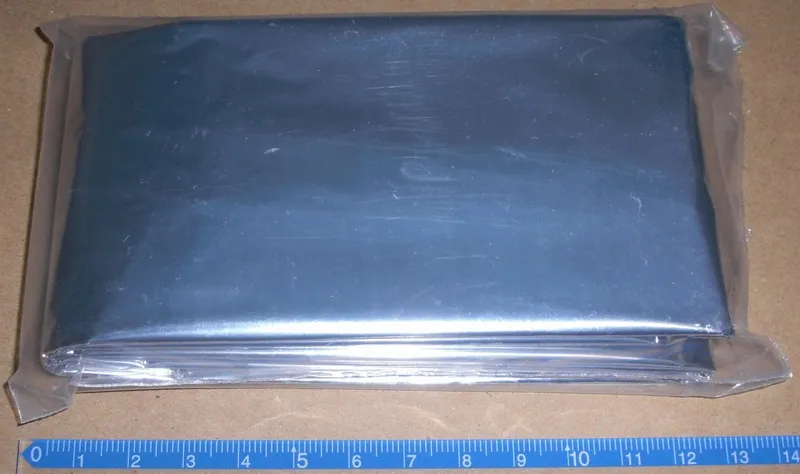
- What: An emergency blanket, or space blanket, is a thin PET film coated with aluminum that reflects heat and traces its design back to aerospace thermal-control materials.
- Where: Used in camping, survival, and emergency kits; originally developed for aerospace applications.
- When: Developed in the mid-20th century and popularized as a consumer product by the 1970s.
It looks like a crinkly $3 camping extra. Its material started life in a far more demanding place: the thermal-control systems of the space age.
The familiar emergency blanket, often called a space blanket, is usually made from PET plastic film coated with a very thin layer of aluminum. PET is the same polymer family used in many plastic bottles, but here it is stretched into an extremely thin, flexible sheet. Add the metallic coating, and the film reflects a large share of radiant heat. The point of the product is not warmth from thickness, but heat retention from reflection.
The “space” part is not just marketing language. Aluminized plastic films were developed for aerospace use in the mid-20th century, especially as engineers in the United States and elsewhere worked on ways to protect spacecraft and satellites from extreme temperature swings. In orbit, surfaces can heat up intensely in sunlight and cool sharply in shadow. Thin reflective films became one practical answer. The multilayer insulation seen on satellites today is more complex than a camping blanket, but the visual connection is real because the material idea is closely related.
By the 1970s, a stripped-down version of that concept had become a mass-market emergency product. Brands such as the Space All-Weather Blanket helped popularize it as lightweight survival gear that could fit in a pocket, first-aid kit, or car glove box. The appeal was simple: very little bulk, very low cost, and a useful ability to slow heat loss when wrapped around a person or used as a barrier.
That is the interesting part. Many consumer products borrow “inspired by space” language without much substance behind it. Emergency blankets are one of the cleaner examples of a real transfer. Not a satellite part folded into retail packaging, but a direct simplification of an aerospace material solution into an everyday object.
The result is oddly concrete. A hiker’s emergency blanket is disposable, noisy, and easy to overlook, yet it comes from the same basic engineering problem that shaped spacecraft design: managing heat with as little weight as possible. In a backpack or roadside kit, that turns a piece of aluminized film into a cheap, compact tool with a very specific job.
Did You Know?
NASA also uses multilayer insulation on spacecraft, which can have many more layers than a typical emergency blanket.