
🛍️ Artifacts of human ingenuity
New York City Segway Ban Limited Its Early Uses
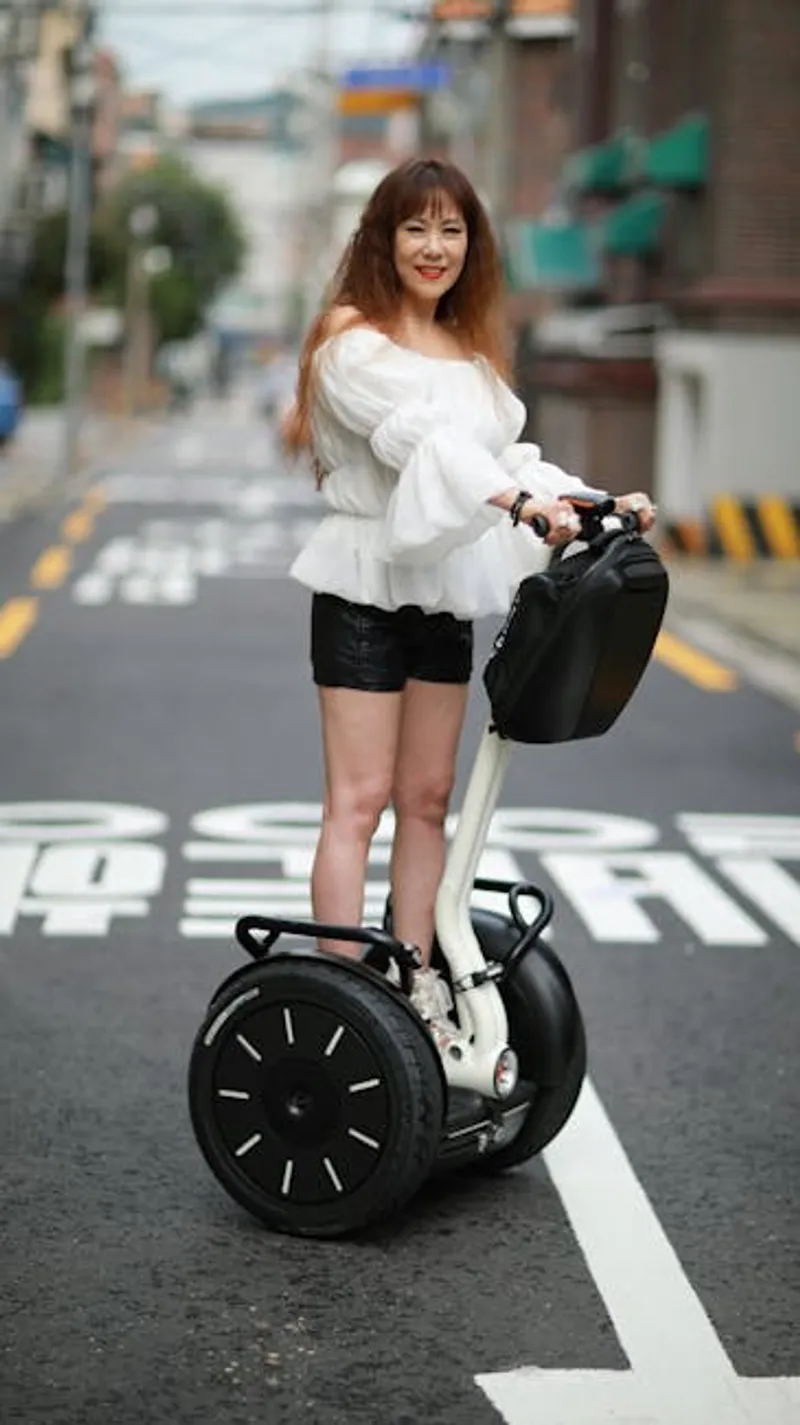
- What: New York City’s rules and older motor-vehicle categories made it difficult for the Segway to be used widely for tourism, policing, or everyday travel.
- Where: New York City, especially streets, sidewalks, parks, and public plazas.
- When: Early 2000s, after the Segway’s 2001 release.
The Segway Personal Transporter arrived in the early 2000s with a very specific promise: a compact machine that could move people through crowded cities without a car. In New York City, that promise ran into the law almost immediately.
Not long after the Segway hit the market in 2001, New York officials made clear that the device did not fit neatly into the city’s street rules. State law already restricted where motorized devices could go, and the Segway’s classification created a practical problem. It was not a bicycle. It was not a pedestrian device. And in many public spaces, it was not welcome.
That mattered because some of the most visible early uses for the Segway depended on exactly those spaces. Tourist operations saw it as a way to move groups around dense urban areas. Police departments around the country tested Segways for patrols in parks, plazas, and busy commercial districts. New York was one of the places where those use cases looked appealing on paper and then became much harder in practice.
The issue was less about one dramatic citywide moment than a legal snag that kept surfacing. Sidewalk use was heavily restricted. Access in parks and public areas faced limits. Officials and agencies had to deal with a basic mismatch between a product designed for short urban trips and a city regulatory system built around older categories. Even where there was interest, routine use became difficult to justify if the machine could not legally operate in the places where it seemed most useful.
That did not mean the Segway disappeared entirely from New York. Some authorized or limited uses existed, and over time tourists did ride Segways in certain controlled settings outside the strictest no-go areas. But the broad image of Segways gliding freely through Manhattan streets, sidewalks, parks, and public plazas was never realistic under the rules that were in place.
The bigger consequence was simple. A product that needed everyday visibility in dense cities lost one of the country’s most important stages. New York was the kind of place where successful use could have normalized the device for commuters, visitors, and public agencies. Instead, legal uncertainty and restrictions undercut the practical cases that were supposed to make the machine feel necessary rather than optional.
In concrete terms, that meant fewer tourist deployments, narrower police applications, and a much smaller urban footprint than early backers had imagined.
Did You Know?
The Segway was first publicly unveiled in 2001 before sales began, and it was initially promoted as a major transportation breakthrough.