
🧪 Echoes from the lab
7 Microbes That Transform Pollution Into Useful or Less Harmful Forms
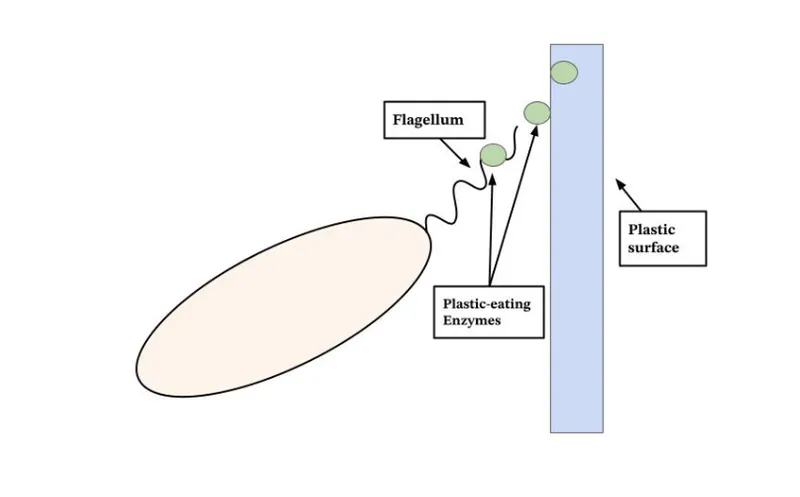
- What: This list highlights microbes and fungi studied for bioremediation because they can chemically transform pollutants such as plastics, oil, metals, and persistent organic compounds into less harmful or more usable forms.
- Where: Polluted environments, including marine waters, soils, sludge, groundwater, and waste-treatment settings.
- When: Contemporary bioremediation research.
Pollution usually looks final: a plastic bottle, a metal-laced plume, an oil slick. End of story.
But at the microbial scale, some of that waste becomes raw material. These seven organisms and microbial groups pull off chemical tricks that sound almost fictional, yet they are being studied because they can break, bind, reduce, oxidize, or transform pollutants into something less harmful or more useful.
1. Ideonella sakaiensis depolymerizes PET plastic
Ideonella sakaiensis became famous for a very specific talent: it can attack PET, the plastic used in many bottles and packaging. It does this with two enzymes, PETase and MHETase, which break the polymer down into terephthalic acid and ethylene glycol.
That matters because PET is built to last. This microbe showed that, under lab conditions, enzymatic recycling is possible in a more targeted way than simply grinding or melting plastic. The surprise is not that plastic can weather over time. It is that a bacterium can help break a common plastic back down toward its building blocks.
2. Geobacter reduces metals and generates current
Geobacter lives by moving electrons outside its cells and handing them off to metal oxides. That ability makes it remarkable in polluted environments, where it can reduce soluble uranium(VI) to insoluble uranium(IV), a change explored for groundwater cleanup.
The same electron-shuttling chemistry also lets Geobacter participate in microbial fuel cells. So the same basic microbial behavior can help immobilize a hazardous metal and, in other settings, generate electrical current. Few cleanup microbes sound this much like living circuitry.
3. Delftia’s peptide precipitates gold
Delftia acidovorans does not mine gold with picks or pans. It secretes a compound called delftibactin, a peptide that binds Au(III) and helps precipitate gold nanoparticles from solution.
That is striking because dissolved gold can be toxic to cells. Delftia’s workaround is chemical judo: lock the gold up and force it out of solution. In the right context, that means a microbe can concentrate a precious metal while protecting itself from it.
4. Alcanivorax blooms on spilled oil
When oil enters marine environments, Alcanivorax often becomes one of the big winners, especially when nutrients are available. These bacteria are hydrocarbon specialists known for oxidizing alkanes.
That is why they matter in natural bioremediation. An oil slick may look like a dead end, but for Alcanivorax, it can become food. The image is almost cinematic: after a spill, invisible populations surge and start working through the hydrocarbons molecule by molecule.
5. Pseudomonas retools pollutants into feedstocks
Pseudomonas is less a one-trick organism than a metabolic toolbox. Various strains can metabolize solvents and aromatic pollutants, including compounds such as toluene, making them important in bioremediation research.
What makes this especially interesting is that engineered Pseudomonas can also convert waste carbon into useful intermediates for bioprocessing. So the same family associated with breaking down contaminants can also be redirected toward making industrial feedstocks.
6. White-rot fungi dismantle persistent organics
White-rot fungi, including Phanerochaete and related species, use enzymes such as laccases and peroxidases to attack stubborn organic molecules. These are the kinds of compounds that often linger in soils, sludges, and waste streams.
Their significance comes from their breadth. Instead of handling just one narrow pollutant, these fungi are explored for degrading recalcitrant organics more broadly. Their chemistry is aggressive enough that they are studied for treating contaminated soils and sludge.
7. Fungal consortia that gnaw on plastics
Some fungi, often working alongside bacteria in consortia, can biodegrade polyurethane and certain other plastics under controlled conditions. This is not a magical overnight fix, and the conditions matter.
Even so, the idea is powerful: mixed microbial communities may widen the options for waste treatment where single-species solutions fall short. Plastic that seems chemically inert to us can become slowly negotiable to the right biological team.
Taken together, these microbes do not erase pollution on command. What they show is something more interesting: waste is sometimes just chemistry waiting for the right organism to touch it.
Did You Know?
Scientists reported Ideonella sakaiensis in 2016 after isolating it from sediment near a plastic recycling facility in Japan.