
🏺 Recovered from the dusty archives
Zheng He's Treasure Fleets Made Imperial Power Visible
- What: The article explains that Zheng He’s early 15th-century Ming voyages were massive state-backed naval missions whose scale and organization projected imperial power across the Indian Ocean.
- Where: The Indian Ocean, especially ports in Southeast Asia, India, Arabia, and East Africa.
- When: Early 1400s, during the reign of the Yongle Emperor and his successors.
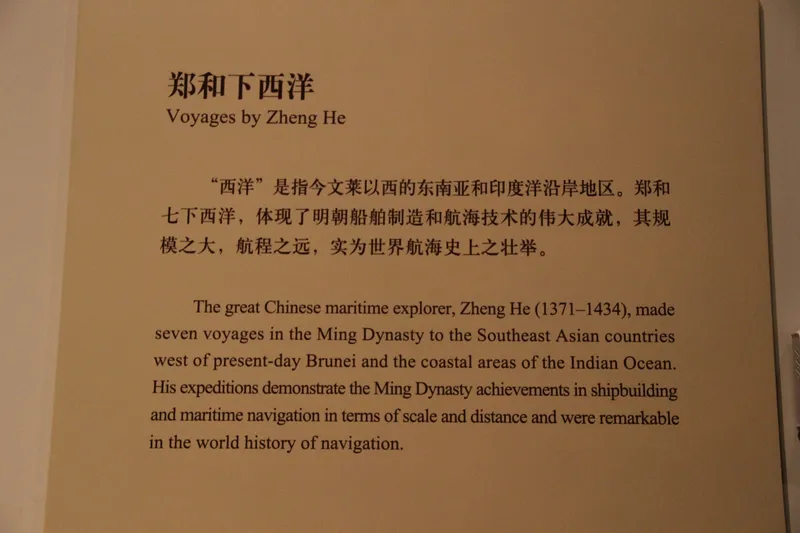
In the early 1400s, the Ming admiral Zheng He sailed across the Indian Ocean with fleets designed to be seen as much as to be used. Contemporary accounts describe enormous “treasure ships,” packed escorts, and crews in the tens of thousands across entire expeditions. Some later measurements for the biggest ships are still debated, and there is no definitive proof for every famous dimension, but the scale of the voyages is not in doubt.
That scale mattered because these voyages were not simple trading runs. They were state missions sent out from Ming China under the Yongle Emperor and his successors. Zheng He’s fleets carried silk, porcelain, and official gifts, but they also carried something less tangible and more important to the court: a display of organized imperial reach. Ports from Southeast Asia to India, Arabia, and East Africa were not just meeting merchants. They were watching a government arrive by sea with disciplined manpower, cargo capacity, diplomatic ritual, and military backup.
This is where the famous ship descriptions fit in. Writers reported vessels with multiple decks and crews so large they sounded almost unreal. Some accounts likened the spaces aboard to temple-sized structures. Historians treat the most dramatic figures cautiously, because eyewitness reports, later retellings, and official records do not always line up cleanly. But even if the largest claims are reduced, the practical picture remains striking: these were huge, coordinated fleets with specialized ships, interpreters, soldiers, officials, sailors, and supplies moving together over long distances.
One way to understand Zheng He’s voyages is as logistics turned into theater. A ruler did not need to conquer every port to make power felt there. He could send a floating administration that distributed gifts, collected tribute, negotiated status, and, when needed, showed force. The spectacle was not separate from policy. It was policy. A harbor filled with towering hulls, formal envoys, and thousands of men told local rulers exactly what kind of state had arrived.
The concrete implication is that Zheng He’s expeditions were less about discovering unknown seas than about staging order on a maritime scale. They showed that early 15th-century Ming China could mobilize resources, personnel, and shipbuilding in a way that turned the ocean into a public display of government capacity.
Did You Know?
Zheng He’s flagship, according to some historical accounts, was said to be one of the largest wooden ships ever described, though the exact measurements are debated.