🏺 Recovered from the dusty archives
Louis Pasteur and the First Successful Human Rabies Vaccination
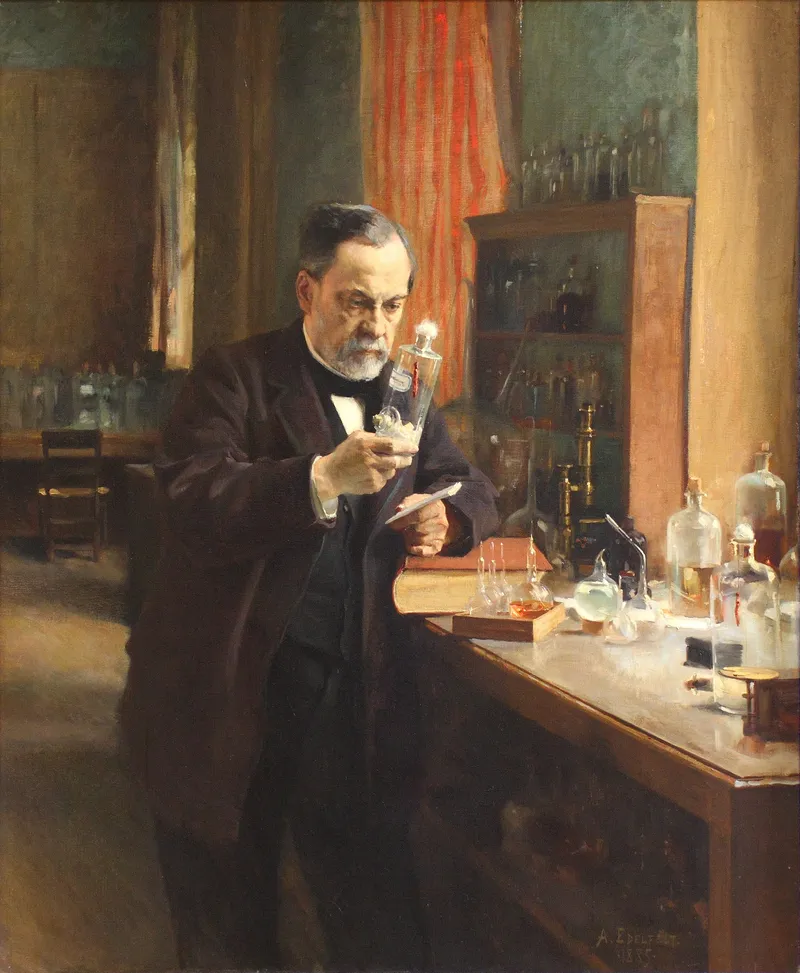
- What: In 1885, Louis Pasteur and physicians used an experimental rabies inoculation on 9-year-old Joseph Meister after a severe dog bite, and the boy did not develop rabies.
- Where: France, especially Paris.
- When: July 1885.
In July 1885 in France, Louis Pasteur faced a decision that medicine was not yet fully ready for. A 9-year-old boy named Joseph Meister had been badly bitten by a dog believed to be rabid. At the time, rabies was one of the most feared diseases in Europe. Once symptoms appeared, death was usually expected.
Joseph Meister's Rabies Case
Pasteur was not a licensed physician. He was a chemist and microbiologist who had been working on a rabies vaccine in animals, but there had been no full human trials. Meister’s injuries were serious, and the case was urgent. If nothing was done, the boy’s chances could be grim. If Pasteur intervened, he would be using an experimental treatment on a child under extreme uncertainty.
He did not act entirely alone. Physicians, including Jacques-Joseph Grancher and Alfred Vulpian, were involved in the decision and supervision. Over several days, Meister received a series of inoculations made from weakened rabies material, an approach Pasteur had been developing through animal experiments. The immediate question was simple and enormous at once: would the treatment prevent the disease before it took hold?
Experimental Rabies Treatment
It did. Joseph Meister did not develop rabies. The result quickly drew attention across France and beyond, because it suggested that rabies might be stopped after exposure, not just avoided beforehand. That was a striking idea in 1885, when many infectious diseases still seemed to move with terrible inevitability.
The episode deserves a balanced view. It was a breakthrough, but also a leap into the unknown. Pasteur and the doctors around him were working in a period before modern clinical trial systems, informed consent standards, and formal regulatory pathways existed in anything like their current form. That does not erase the risk. It explains the setting in which such decisions were made.
Why the Case Mattered
The larger significance is not just that a boy survived. Meister’s case helped move laboratory science into practical medicine in a new way. A treatment developed through experimental research was used in a crisis, then became the basis for wider adoption. Soon patients were traveling to Paris for rabies treatment, and the Pasteur Institute would be founded in 1887. The concrete implication is that one uncertain intervention, carried out under pressure, helped establish post-exposure vaccination as a real medical possibility rather than a theory.
Did You Know?
Joseph Meister later worked as a caretaker at the Pasteur Institute in Paris.