
🧪 Echoes from the lab
Devils Hole Pupfish Survival Depends on Inches of Water
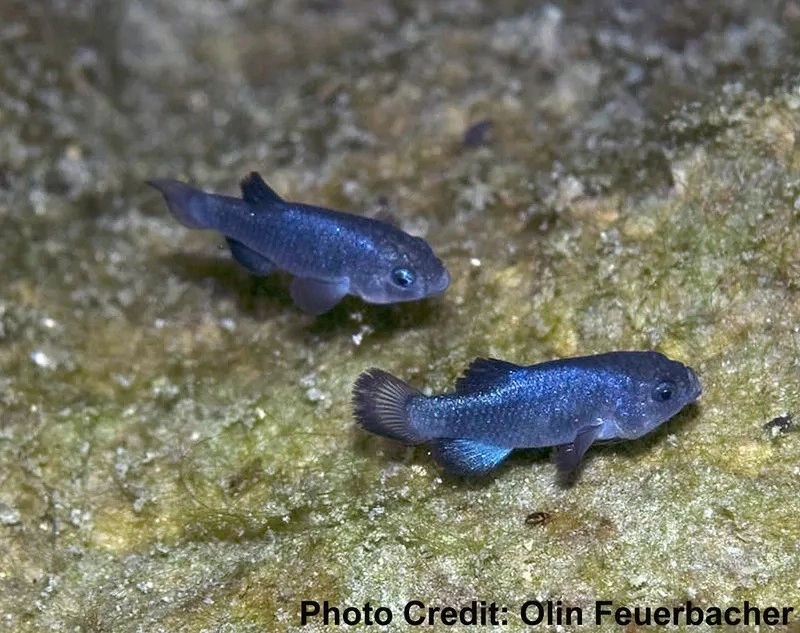
- What: The Devils Hole pupfish depends on a very small sunlit spawning shelf in Devils Hole, where even slight water-level drops can reduce breeding habitat and threaten reproduction.
- Where: Devils Hole, a geothermal pool in Nevada’s Death Valley National Park.
- When: Especially during the 20th century and in ongoing seasonal and annual monitoring of the population.
In a remote limestone cavern in Nevada, the Devils Hole pupfish lives in only one place in the wild: a single geothermal pool inside Devils Hole, part of Death Valley National Park. For this fish, reproduction can depend on a difference measured in inches.
Spawning Shelf Habitat
The critical spot is a shallow rock shelf near the surface, one of the few places in the pool that gets enough sunlight for algae to grow and where the fish typically spawn. If the water level drops too far, that narrow shelf is exposed or left too shallow. Then the fish lose key breeding habitat, food production on the shelf falls, and reproduction can stall.
That relationship between water level and breeding has made Devils Hole famous in conservation biology. The fish is tiny, usually about an inch long, but its living space is smaller than many rooms. Most of the pool is deep, dark, and steep-sided. The shelf is the exception: a thin, bright margin where eggs can be laid and young fish can find conditions they can use.
Water Level and Reproduction
Because the habitat is so constrained, small hydrologic changes matter in a way they would not for most species. Groundwater pumping in the region became a major concern in the 20th century because it could lower the water table and reduce coverage of the spawning shelf. Long-term monitoring has also tied seasonal and annual changes in population size to conditions on that shelf, including water level and food availability.
This is what makes the Devils Hole pupfish unusual even among endangered animals. Many species decline when large areas are damaged. Here, a few inches of water on one sunlit ledge can decide whether an entire species reproduces well in a given season. The consequence is stark: conservation is not mainly about protecting a broad landscape feature, but about preserving exact physical conditions in one precise place.
Why Small Changes Matter
That means the margin for error is extremely small. A slight drop in water level at Devils Hole is not an abstract environmental change. It can directly reduce spawning habitat for the only wild population of this fish, putting the species at immediate risk.
Did You Know?
The Devils Hole pupfish is one of the smallest fish in North America, with adults typically reaching only about an inch long.